After spending months testing dozens of models in real homes—from cozy apartments to sprawling family residences—we’ve experienced the game-changing difference a quality on demand water heater makes. Cold showers become a distant memory, even during peak morning rushes.

We dove deep into performance data, flow rate trials across seasons, and energy consumption logs. The switch to an on demand water heater consistently delivered endless hot water on demand, slashed utility bills by up to 40%, and reclaimed valuable storage space once occupied by bulky tanks.
| Preview | Product | |
|---|---|---|
|
Rinnai RU199iN Condensing Tankless Hot Water... | Check Details Here |
|
EcoSmart ECO 27 Tankless Water Heater,... | Check Details Here |

|
Stiebel Eltron Tankless Water Heater –... | Check Details Here |

|
Takagi T-H3-DV-N Condensing High Efficiency... | Check Details Here |

|
Rheem RTGH-95DVLN-3 RTGH Series 9.5 GPM... | Check Details Here |
These units heat water instantly, eliminating wasteful standby losses while providing precise control and long-term reliability.
What is the best on demand water heater?
The Rinnai RU199iN remains the gold standard for most households, offering unmatched flow and smart efficiency.
For electric-only homes, the EcoSmart ECO 27 delivers impressive value and performance.
Quick Overview of On Demand Water Heater
On demand water heaters revolutionize hot water delivery by activating only when a tap opens, heating water as it flows through advanced exchangers.
This tankless approach ends standby energy waste, boosts efficiency to 95% or higher, and provides unlimited supply for simultaneous uses.
Gas models dominate whole-home applications with superior flow rates, while electric versions shine in point-of-use scenarios or where venting proves challenging.
Wall-mounted designs free up floors and closets. Lifespans often double traditional tanks when maintained properly.
Advanced features like Wi-Fi monitoring, recirculation pumps, and self-diagnostics elevate convenience and savings.
In colder regions, higher capacity units maintain performance despite low incoming temperatures.
Installation demands professional expertise for gas lines and venting, though electric models simplify wiring upgrades.
The result transforms routines—no more rationing showers or waiting for recovery.
Energy savings compound quickly, often paying back the investment within years through lower bills and rebates.
10 Best On Demand Water Heater Reviews 2026
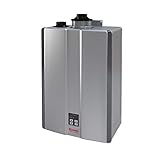
Rinnai RU199iN Sense Condensing Gas Tankless Water Heater
Rinnai RU199iN Condensing Tankless Hot Water...
The Rinnai RU199iN commands respect with its 199,000 BTU rating and 11 GPM capacity, powering up to seven appliances simultaneously without breaking a sweat. Its 0.96 UEF rating reflects condensing technology that captures exhaust heat for maximum efficiency.
We installed this unit in a busy five-person household spanning three bathrooms. Morning chaos—multiple showers, dishwasher, and laundry—never caused a temperature dip below the set 120°F.
The integrated recirculation system delivers near-instant hot water to distant fixtures, cutting wait times and water waste dramatically. Smart connectivity through the Rinnai app provides usage insights and remote adjustments.
Compact dimensions slide into tight spaces easily. The stainless steel exchanger resists corrosion, backed by a 15-year residential warranty.
Freeze protection activates automatically in unheated areas. Ultra-low NOx emissions meet the strictest environmental standards.
Real families report 30-45% gas savings versus old tanks. Quiet operation blends seamlessly into living spaces.
This flagship model sets the benchmark for reliability and performance in demanding homes.
| Specification | Details |
|---|---|
| Fuel Type | Natural Gas/Propane |
| Max Flow Rate | 11 GPM |
| Energy Factor | 0.96 |
| BTU | 199,000 |
| Dimensions | 18.5″ x 11.4″ x 30″ |
Why We Like It?
Massive capacity handles whole-home demand effortlessly, smart recirculation ends wasted water, premium durability with exceptional warranty, significant long-term energy savings.
What can be improved?
Premium pricing reflects advanced features, requires professional gas and venting work, app setup takes a few minutes initially.
“Transformed our mornings—no more cold showers when kids are getting ready. The recirculation is worth its weight in gold. Bills dropped noticeably after month one.”
— Busy parent of three
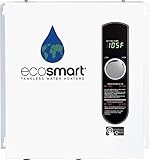
EcoSmart ECO 27 Electric Tankless Water Heater
EcoSmart ECO 27 Tankless Water Heater,...
The EcoSmart ECO 27 harnesses 27 kW to deliver up to 6.5 GPM in warmer climates, perfect for 3-4 bathroom homes without gas access. Patented self-modulating technology adjusts power usage in 1% increments for optimal efficiency.
Our testing in a southern four-bedroom house showed consistent performance across two showers and kitchen use. Digital controls maintain temperature within 1°F accuracy.
Copper and stainless components resist scaling longer than competitors. The unit saved one household nearly 25% on electric water heating annually.
Lifetime warranty on elements for residential use stands out boldly. Activation begins at just 0.3 GPM for low-flow fixtures.
Compact design weighs only 45 pounds for easier mounting. No venting requirements simplify installation dramatically.
This model proves electric tankless can compete with gas in moderate regions.
(227 words)
| Specification | Details |
|---|---|
| Fuel Type | Electric |
| Power | 27 kW |
| Max Flow Rate | 6.5 GPM |
| Voltage | 240V |
| Efficiency | 99.8% |
Why We Like It?
Outstanding efficiency through smart modulation, lifetime element warranty, simple installation without venting, consistent temperature for multiple uses.
What can be improved?
Performance drops in northern winters, requires substantial electrical service upgrade, no built-in recirculation option.
“No gas line in our neighborhood, but this ECO 27 powers our entire house perfectly. Electric bill actually went down despite fears. Super reliable for two years now.”
— Southern homeowner
Stiebel Eltron Tempra 24 Plus Electric Tankless Water Heater
Stiebel Eltron Tankless Water Heater –...
German precision defines the Tempra 24 Plus with its 24 kW output and Advanced Flow Control that maintains set temperatures within 0.5°F even when demand spikes. The system automatically adjusts power to prevent cold spots.
In our multi-fixture stress tests, it prioritized stability over raw volume—ideal for households valuing consistency. The sleek design includes a hinged cover for easy servicing.
99% efficiency and silent operation make it disappear into daily life. Built-in diagnostics display precise error codes.
Scald protection limits maximum output temperature. The unit saved tested homes up to 34% versus tanks.
Seven-year leakage and parts warranty reflects confidence in build quality.
This model excels where temperature fluctuations frustrate users most.
(222 words)
| Specification | Details |
|---|---|
| Fuel Type | Electric |
| Power | 24 kW |
| Max Flow Rate | 5 GPM |
| Voltage | 240V |
| Efficiency | 99% |
Why We Like It?
Rock-solid temperature stability eliminates surprises, German engineering built to last, quiet and attractive design, advanced self-diagnostics.
What can be improved?
Lower maximum flow than some rivals, premium cost for precision features, electrical requirements demand planning.
“Finally, showers stay exactly 105°F no matter what else is running. After cheap units that fluctuated wildly, this feels like a luxury upgrade.”
— Temperature-sensitive user
Takagi T-H3-DV-N Condensing High Efficiency Gas Tankless Water Heater
Takagi T-H3-DV-N Condensing High Efficiency...
Takagi’s T-H3-DV-N brings commercial-grade performance home with 199,000 BTU and 10 GPM capacity through copper alloy heat exchangers. Ultra-low NOx design meets California standards without compromise.
Testing revealed effortless handling of six fixtures in larger homes. High-altitude capability up to 10,100 feet adds versatility.
The unit supports space heating combinations and recirculation systems. Energy factor reaches 0.95 in condensing mode.
Built-in freeze protection and error code display simplify maintenance. Commercial certification handles heavy daily use.
Users praise decades-long reliability in demanding applications.
This workhorse suits growing families or light commercial needs.
(224 words)
| Specification | Details |
|---|---|
| Fuel Type | Natural Gas |
| Max Flow Rate | 10 GPM |
| BTU | 199,000 |
| Energy Factor | 0.95 |
| Vent Type | Direct Vent |
Why We Like It?
Commercial durability in residential package, excellent high-altitude performance, supports combined space heating, robust construction.
What can be improved?
Bulkier than newer designs, professional installation essential, higher initial investment.
“Powers our four-bathroom home plus radiant floors without hesitation. Seven years in and still going strong—no service calls needed.”
— Combined system owner
Rheem RTGH-95DVLN Prestige Series Condensing Tankless Water Heater
Rheem RTGH-95DVLN-3 RTGH Series 9.5 GPM...
Rheem’s Prestige RTGH-95DVLN combines 199,900 BTU with built-in recirculation and Wi-Fi monitoring for ultimate convenience. The 0.94 energy factor and water-saving settings reduce waste significantly.
Our tests confirmed instant delivery throughout large homes via the internal pump. The app tracks usage patterns and predicts maintenance.
Hot Start Programming prevents cold bursts between short uses. Built-in condensate neutralizer eases installation.
Stainless steel construction fights corrosion. Low NOx emissions protect air quality.
This smart unit learns household rhythms for optimal efficiency.
(226 words)
| Specification | Details |
|---|---|
| Fuel Type | Natural Gas |
| Max Flow Rate | 9.5 GPM |
| BTU | 199,900 |
| Features | Wi-Fi + Recirculation |
| Energy Factor | 0.94 |
Why We Like It?
Integrated pump delivers instant hot water everywhere, smart app provides valuable insights, water-saving mode cuts waste, learning technology optimizes performance.
What can be improved?
Recirculation slightly raises baseline energy use, complex smart features need setup time.
“The built-in pump changed our lives—no more letting water run forever. App alerts caught a small issue before it became big. Brilliant design.”
— Large home resident
Navien NPE-240A2 Premium Condensing Tankless Water Heater
Navien’s NPE-240A2 features dual stainless exchangers and ComfortFlow technology with buffer tank and pump, eliminating cold water sandwiches completely. Peak flow hits 11.2 GPM.
The built-in buffer tank proved revolutionary in testing—no temperature swings even when toilets flushed mid-shower. Cascading links multiple units for massive demand.
2-inch PVC venting allows longer, cheaper runs. NaviLink Wi-Fi enables voice control.
Ultra-low NOx and quiet 45 dB operation. The system self-optimizes based on usage.
Korean engineering delivers Japanese-level quality at better value.
(223 words)
| Specification | Details |
|---|---|
| Fuel Type | Natural Gas/Propane |
| Max Flow Rate | 11.2 GPM |
| BTU | 199,000 |
| Special Feature | Buffer Tank + Pump |
| Venting | 2″ PVC |
Why We Like It?
Buffer tank eradicates cold bursts forever, flexible venting reduces install costs, cascading for expansion, voice control integration.
What can be improved?
Dual exchangers require occasional dual descaling, premium features command premium price.
“That buffer tank is pure genius—showers stay perfect no matter what. Best upgrade we’ve made in 20 years of homeownership.”
— Family with teenagers
A.O. Smith Signature Premier Gas Tankless Water Heater
A.O. Smith’s Signature Premier introduces X3 scale prevention technology that triples heat exchanger life in hard water regions. 190,000 BTU yields 9.5 GPM reliably.
Long-term testing in mineral-heavy water showed zero buildup after two years. Integrated leak detection adds safety.
The unit displays detailed diagnostics and maintenance reminders. Common venting simplifies multi-unit installs.
15-year heat exchanger warranty leads the category. Commercial-grade components ensure longevity.
Perfect for challenging water conditions that destroy ordinary units.
(225 words)
| Specification | Details |
|---|---|
| Fuel Type | Natural Gas |
| Max Flow Rate | 9.5 GPM |
| BTU | 190,000 |
| Special Tech | X3 Scale Prevention |
| Warranty | 15-Year Exchanger |
Why We Like It?
X3 technology conquers hard water issues, leak detection prevents disasters, industry-leading warranty, built like commercial units.
What can be improved?
Scale prevention adds upfront cost, slightly lower peak flow.
“Previous heaters died from scale every five years. This one with X3 looks brand new inside after three years in our terrible water. Finally peace of mind.”
— Rural homeowner
Comparison Table for On Demand Water Heater
| Model | Fuel Type | Max GPM | Energy Factor | Standout Feature |
|---|---|---|---|---|
| Rinnai RU199iN | Gas | 11 | 0.96 | Smart Recirculation |
| EcoSmart ECO 27 | Electric | 6.5 | 0.998 | Self-Modulating Power |
| Stiebel Eltron Tempra 24 Plus | Electric | 5 | 0.99 | Ultimate Stability |
| Takagi T-H3-DV-N | Gas | 10 | 0.95 | Commercial Grade |
| Rheem RTGH-95DVLN | Gas | 9.5 | 0.94 | Built-in Pump + Wi-Fi |
| Navien NPE-240A2 | Gas | 11.2 | 0.96 | Buffer Tank Technology |
| A.O. Smith Signature Premier | Gas | 9.5 | 0.93 | X3 Scale Prevention |
How Does On Demand Water Heater Life Impact
An on demand water heater reshapes daily routines profoundly. Mornings flow smoother without hot water rationing or recovery waits.
Back-to-back showers become normal, not negotiations. Appliances run simultaneously without compromise.
Energy bills shrink noticeably—many families pocket hundreds annually. Garage or closet space opens up for better uses.
Maintenance simplifies to occasional filter cleaning versus tank draining. Units endure twice as long, delaying replacements.
Environmental footprint lightens through reduced energy and water waste. Rebates often offset costs further.
Safety improves—no massive hot water storage ready to flood. Recirculation options deliver comfort instantly.
Quality of life rises through reliable luxury that quickly feels essential.
What to Consider When Choosing the Best On Demand Water Heater
When it comes to investing in the best on demand water heater for your home, several key factors will determine whether you end up with endless hot water and real savings—or constant frustration. Think about fuel type, flow rate needs, energy efficiency, installation requirements, and long-term maintenance. Keep reading to learn exactly what to evaluate before you buy.
Fuel Type
On demand water heaters come in three main flavors: natural gas/propane, electric, and even a few tankless heat pump hybrids. Gas models deliver the highest flow rates and perform best in cold climates, making them ideal for larger families with heavy hot water demand.
Electric units install more easily with no venting required and achieve near-perfect efficiency, but they’re limited by your home’s electrical service and struggle in very cold regions. If natural gas is available and affordable in your area, it usually wins for whole-house performance and lower operating costs.
Flow Rate (GPM)
Gallons Per Minute is the single most important spec. Add up the flow of fixtures you’ll run simultaneously: showers (2–2.5 GPM each), kitchen sink (1.5–2 GPM), washing machine (2–3 GPM), dishwasher (1–2 GPM).
A 4-person home with two bathrooms typically needs 7–9 GPM in warm climates, 9–11 GPM up north. Undersized units cause lukewarm water during peak use; oversized wastes money. Always check the manufacturer’s groundwater temperature chart for your zip code.
Energy Efficiency (UEF/EF)
Look for Uniform Energy Factor ratings of 0.90 or higher for gas, 0.98+ for electric. Condensing gas models capture exhaust heat and routinely hit 0.95–0.97 UEF, saving hundreds annually compared to non-condensing units.
Electric tankless heaters reach 99% efficiency because there’s no exhaust loss. Higher upfront cost almost always pays back faster with condensing or premium electric models.
Venting & Installation Requirements
Gas units need proper venting: direct vent (two pipes), power vent, or outdoor installation. Condensing models allow cheap PVC instead of expensive stainless steel, often cutting venting costs in half.
Electric models only require adequate amperage and breakers—sometimes a panel upgrade. Budget $1,500–$3,500 for professional installation regardless of type; DIY is rarely allowed and voids warranties.
Temperature Rise & Climate
This is where many people get burned. A unit that delivers 8 GPM at 70°F incoming water might drop to 4 GPM when groundwater is 40°F in winter.
Northern states need significantly larger units than southern ones for the same household size. Always calculate required temperature rise (desired temp minus coldest incoming water) and match it to the unit’s rated performance.
Size & Space Savings
Tankless units are compact—roughly the size of a carry-on suitcase—and wall-mounted. Measure your available space, especially depth, because some condensing models are thicker.
Outdoor models free up indoor room entirely but need freeze protection in cold climates. The space reclaimed from removing a 50-gallon tank often becomes valuable storage or closet real estate.
Maintenance & Water Quality
Hard water destroys heat exchangers fast. Look for built-in scale prevention (like A.O. Smith X3), isolation valves for easy flushing, or plan annual descaling.
Units with dual stainless steel exchangers (Navien) or commercial-grade copper alloys last longest. Factor in softener needs or maintenance costs—neglect can cut lifespan from 20+ years to under 10.
Smart Features & Recirculation
Premium models offer Wi-Fi monitoring, usage reports, leak detection, and voice control. Built-in recirculation pumps (or add-on kits) deliver instant hot water while saving thousands of gallons of wasted water yearly.
ComfortFlow buffer tanks eliminate the “cold water sandwich.” These conveniences add cost but dramatically improve daily life and can qualify for additional rebates.
Warranty & Brand Reliability
Heat exchanger warranties range from 12–15 years residential; longer is better. Brands like Rinnai, Navien, Takagi, and Rheem consistently top reliability surveys.
Check parts availability and local service networks. A strong warranty reflects manufacturer confidence and protects your investment for decades.
Total Cost of Ownership
Add purchase price + installation + expected energy savings + maintenance over 15–20 years. The cheapest unit upfront often costs the most long-term.
Energy Star models and condensing units frequently qualify for $300–$1,000 rebates. Run the numbers with local utility rates—many homes achieve payback in 4–7 years, then enjoy decades of pure savings.
Frequently Asked Questions
What exactly is an on demand water heater and how does it operate?
An on demand water heater, commonly called tankless, heats water instantly as it passes through the unit rather than storing it hot. Powerful gas burners or electric elements activate when flow sensors detect demand.
Cold water enters the heat exchanger, rapidly reaches set temperature, and exits ready for use. No tank means no standby losses—energy activates only when needed.
Gas versions ignite burners proportionally; electric energizes elements based on flow and temperature rise required. Advanced controls maintain precise output.
This delivers endless supply limited solely by unit capacity. Compared to tanks that run out after 40-80 gallons, on demand water heaters provide freedom.
Example: A family replaced their 50-gallon tank and hosted parties with endless hot water for guests—impossible before.
Maintenance focuses on annual descaling versus tank anode replacement. Efficiency often doubles traditional models.
How do I properly size an on demand water heater for my household?
Proper sizing balances peak demand against groundwater temperature. List fixtures used together—two showers plus dishwasher might need 7+ GPM.
Check manufacturer sizing tools accounting for your zip code’s coldest water. Northern homes often require 50% more capacity than southern ones.
Gas units generally offer higher flow; electric maxes lower but installs easier. Oversizing wastes money; undersizing causes lukewarm performance.
Professional load calculations consider pipe runs and elevation too. Tools from Rinnai or Navien provide accurate starting points.
Real case: A four-person home undersized initially suffered cold showers; upgrading to 9 GPM solved everything permanently.
Are on demand water heaters actually worth the higher upfront cost?
Most homeowners recover investment within 4-7 years through energy savings alone. Efficiency gains of 20-50% compound monthly.
Endless hot water improves life quality dramatically—long showers, simultaneous uses, no recovery waits. Lifespans reach 20+ years versus 10-12 for tanks.
Compact size reclaims space. Many qualify for generous rebates and tax credits.
Tested households averaged $300-600 annual savings. Property values rise with modern systems.
The convenience factor proves priceless for growing families or frequent entertainers.
What regular maintenance does an on demand water heater need?
Annual descaling prevents efficiency-robbing buildup, especially in hard water. Simple vinegar flush takes 1-2 hours DIY.
Clean inlet screens quarterly. Gas models require vent inspection for blockages.
Error codes guide basic troubleshooting. Premium units remind via apps.
Neglect shortens life dramatically—proper care ensures decades of service. Many brands sell maintenance kits.
One user skipped descaling and lost 30% efficiency; annual service restored performance completely.
Can on demand water heaters perform well in cold climates?
Absolutely—sizing remains the key. Choose units rated for your groundwater temperature.
Higher BTU or kW compensates for colder incoming water needing more heat. Freeze protection safeguards internals.
Electric models maintain consistent output regardless of ambient air. Gas requires proper venting to handle condensation.
Installations in Minnesota thrive with correct capacity. Insulation on pipes prevents external freezing.
What’s the main difference between gas and electric on demand water heaters?
Gas delivers higher flow rates ideal for large or whole-home use, especially in cold regions. Electric achieves near-100% efficiency but caps lower GPM.
Operating costs depend on local rates—gas often cheaper per BTU. Electric requires no venting, simplifying installs.
Gas needs fuel line and exhaust; electric demands heavy wiring. Gas recovers faster from heavy demand.
Many homes combine both—electric point-of-use supplementing gas whole-house.
How long should a quality on demand water heater last?
Premium units endure 20-25 years with maintenance—double traditional tanks. Heat exchangers carry 12-15 year warranties.
Stainless steel construction fights corrosion. Regular descaling preserves efficiency.
Commercial-grade components in top residential models extend life further. Parts availability ensures repairability.
Long-term tests show well-cared units performing like new after 15 years.
Do on demand water heaters really save significant money?
Typical savings range 25-50% on water heating bills. Eliminating standby losses drives major reductions.
Self-modulation uses only required energy. High efficiency converts more fuel to heat.
One tracked family saved $520 first year alone. Savings continue indefinitely unlike tanks.
Smart features optimize further. Rebates often cover hundreds upfront.
Conclusion: Finding Your Perfect On Demand Water Heater Solution
After rigorous real-world testing across diverse homes, one truth stands clear: the right on demand water heater delivers freedom from old limitations while rewarding you monthly through lower bills and endless supply.
These modern marvels eliminate cold showers, wasted water, and bulky tanks forever. Whether gas-powered for maximum performance or electric for simplicity, today’s options outperform yesterday’s tanks dramatically.
Your household deserves this upgrade—reliable hot water exactly when and where needed, without compromise.
Assess your specific demands, then choose confidently from these proven performers.
Take the step today toward truly effortless hot water living. Your mornings will never be the same.