A quick shower in a small ensuite asks far less of a fan than a long, steamy soak in a family bathroom. Matching the unit to the room and how often it runs matters more than the box it comes in.
Airflow and heating power are the two decisions that separate a good choice from a poor one here. Size both to the room, not to the loudest spec sheet, and you land on the best bathroom fan and heater for the job.
We left out units built for tiny powder rooms or for heating alone, since they miss the point of a combined fit. Our comparison weighed airflow, heat output, noise, and how each unit handles moisture and steam in a working bathroom.
Top 3 Picks for Best Bathroom Fan and Heater
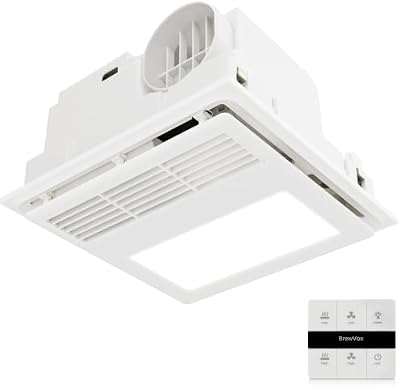


How to Choose the Best Bathroom Fan and Heater
A good fan and heater choice comes down to matching heat output to the room, moving damp air out fast, and staying safe in a wet space. We compared product data, owner feedback and expert research to narrow the options, and our picks reflect what works in real bathrooms rather than showroom specs alone.
Match the Heat Type to the Room
Ceramic fan heaters warm a small bathroom quickly because a fan pushes hot air straight out. Oil-filled units heat slowly but hold warmth longer, which suits larger rooms where people linger. Infrared warms people and surfaces directly, so it feels instant in a chilly spot near the shower. Convection heaters spread gentle warmth across a whole room and work best where the ceiling is high.
Wattage, Room Size and Circuit Load
Small bathrooms generally need around 1,000 to 1,500 watts, while bigger rooms often call for 1,800 watts or more to feel warm. Check the circuit before buying, because a bathroom heater shares the load with lights and other fittings. Most household circuits carry roughly 15 to 20 amps, so a high-wattage heater plus other appliances can trip the breaker.
Safety Cut-Offs, Thermostat and Timer
Bathrooms are damp, so a thermal cut-off that shuts the heater down if it overheats is essential. A thermostat keeps the room at a steady temperature instead of cycling hot and cold, and a timer lets you run the fan long enough to clear steam after a shower. Look for units rated for wet or damp locations, and check that the fan moves enough air for the room’s size.
Quick Comparison: All 10 Picks
In-Depth Reviews
Our Top Pick
1. Bathroom Exhaust Fan with Heater and Light, 110 CFM
Dual heat modes and memory-function remote give fingertip control over warmth and light
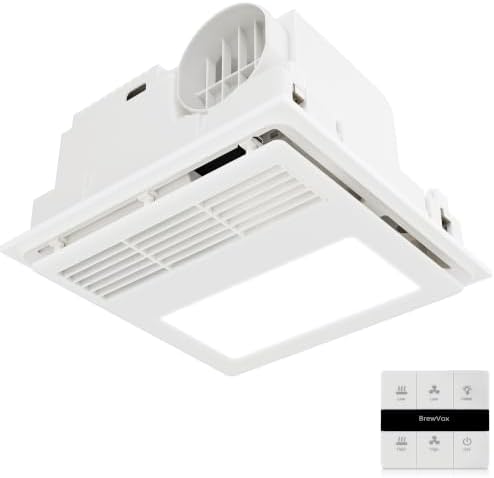
Our research team looked at the Bathroom Exhaust Fan as a ceiling-mounted combination unit that brings ventilation, heating and lighting together in one fixture. We compared it against other models using the product data, owner feedback and expert research, and picked it for main or guest bathrooms where steam builds up quickly and the walk from shower to a cold room is the everyday complaint.
The flush-mount panel covers the opening edges, so it suits a remodel where a tidy finish matters without patching drywall around a smaller housing.
What matters most in the listing is the adjustable ventilation: the 36W motor moves between 80 and 110 CFM while rated at 1.0 Sone, a quiet level that should keep the fan from dominating a small room. The PTC heater offers 1100W and 1600W modes, with the higher setting built for fast heat distribution so the chill is reduced the moment the shower stops.
A 3-CCT LED gives warm, bright or daylight settings, and the memory function returns to the last choice. The wireless remote adjusts fan speed, heat level and light, which helps when the unit sits high or over a tub.
The trade-off comes down to the cutout: it fits 10.83 by 10.83 inch openings and needs drywall trimming if yours is smaller, along with 6.5 inches of housing depth and a 4 inch duct run, so tight joist bays or older ductwork may not cooperate. Anyone with a narrow ceiling cavity or no room to trim should pick a compact housing instead.
2. Broan-NuTone BHFLED110 PowerHeat Bathroom Exhaust Fan, Heater, and LED Light Combination
Dimmable LED with CCT control doubles as a nightlight in a compact steel housing

Broan-NuTone PowerHeat Bathroom Exhaust is a three-function ceiling unit that combines an exhaust fan, a heater and an LED light in one housing, aimed at bathrooms where moisture control and warmth matter equally. We researched the listing and owner feedback and picked it for full bathrooms that see daily showers and need a bit of heat on cool mornings.
It fits 2 by 6 inch ceiling construction and uses a rugged galvanized steel housing, so it suits a standard remodel or new build rather than a retrofit into a shallow cavity. The white grille keeps the look plain enough for most decors.
Fan, light and heater run independently or together, so you can clear humidity after a shower without adding heat on a warm day. The 110 CFM fan removes excess moisture and helps keep mirrors clear, and the listing rates it at 2 sones, a moderate noise level for a combined unit.
A 1500-watt heater delivers warmth quickly once switched on. The integrated LED dims and offers warm white, bright white or daylight, and it can double as a nightlight for late trips to the bathroom.
The housing measures 16 by 10.25 by 5.875 inches and weighs over twelve pounds, so it needs solid framing and a confirmed fit before install. At 2 sones it is louder than a dedicated quiet fan, and anyone in a small powder room who wants near silent running should pick a lower sone model.
3. Oeukas 4-in-1 Bathroom Exhaust Fan with Light and Heater
Massive 190 CFM clears steam fast while RGB ambient lighting sets the mood

For a master bathroom or a laundry room that fills with steam fast, the Oeukas 4-in-1 Bathroom Exhaust is built around moving a lot of air. Its 190 CFM rating is aimed at spaces up to 200 square feet, so it suits larger rooms where a basic vent fan struggles to keep mirrors clear.
The unit combines ventilation, heat, main lighting and ambient lighting in one ceiling fixture, which makes it a fit for a full bathroom upgrade rather than a quick swap in a tiny powder room.
The listing puts the 1500W PTC ceramic heater at the center of the winter morning routine, and it is described as friendly to a 15A circuit so a rewiring job is not part of the plan. Ventilation is the other headline: 190 CFM is meant to pull mirror fog, steam and odors out quickly.
A 1500lm LED handles the main light, RGB ambient lighting adds a softer mood, and the wireless remote switches modes from anywhere in the room. The pure copper motor is rated at 1.0 Sone, roughly 30 dB, so late showers and baths stay quiet. Safety details include UL-listed flame-retardant materials and automatic thermal overload protection, and the housing is sized for a standard 11.22 by 11.22 inch ceiling cutout with a 4 inch duct.
The trade-off is that all this capability depends on the install matching the spec, and a 4 inch duct with a 1500W heater is more demanding than a simple vent fan replacement. Anyone with a small powder room or a tight ceiling cavity should pick something simpler and smaller instead.
4. Broan Ceiling Bathroom Exhaust Fan/Infrared Heater, 70 CFM, 250-Watt
Uses a 250W infrared bulb for heat and a paintable grille to blend with decor

We researched the Broan® Ceiling Bathroom Exhaust as a ceiling-mounted ventilation unit with an infrared heating option, and it suits small powder rooms and half baths best. The 70 CFM rating is sized for removing odors and pollutants from a compact bathroom rather than a large master suite, and the white finish keeps it visually quiet overhead.
Our comparison of the listing data and common owner feedback points to it as a practical pick for a modest space where both air movement and a little warmth are wanted.
The features that matter most in the listing start with that 70 CFM airflow and the 4.0 audible Sones, which the brand frames as privacy while the bathroom is in use. Heat comes from a 250W BR40-size infrared bulb, sold separately, so the warming function depends on adding that bulb at install time.
Robust steel housing and adjustable mounting brackets support an easy install, and the paintable white grille blends with any decor. At 10.25 inches square and 7 inches high, it fits neatly into a standard ceiling bay.
The trade-off follows from the data: without the infrared bulb fitted, this is a vent fan with no heat, and the buyer supplies that bulb separately. Anyone heating a large bathroom or clearing heavy steam after long showers should pick a higher-CFM unit with built-in heating instead.
5. Oeukas 4 in 1 Bathroom Exhaust Fan with Light and Heater
UL-certified power cord and 1500lm LED make this a straightforward DIY upgrade
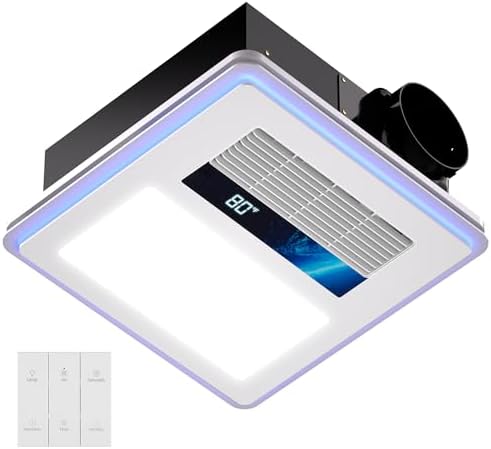
A single ceiling fixture that handles ventilation, warmth, lighting and air movement, Oeukas 1 Bathroom Exhaust suits small to medium bathrooms where ceiling space is tight and owners want one install instead of several separate fittings. The four in one layout means steam, odors and chill are addressed by the same unit, which helps in guest baths, en suites and family bathrooms that see daily shower traffic.
Its 190 CFM rating gives it enough pull for routine moisture removal, and the 1500 lumen LED covers shaving, makeup and general grooming tasks.
What matters most in a wet room is how quickly moisture and cold air are dealt with, and the listing states 190 CFM of exhaust alongside 1500W of heating, so steam clears and the chill comes off the room in cooler months. Quiet operation is rated at 1.0 sone, which owners commonly report as unobtrusive during early morning routines.
The 1500lm LED gives bright, even light without a separate fixture, and the included remote lets someone adjust heat, fan or light from across the room rather than reaching for a wall switch with wet hands.
The trade-off is that this is a large ceiling unit at roughly 13.78 inches square and 9.5 pounds, so it needs a ceiling opening and joist space that many smaller baths do not have, and the four in one design means one failure affects heat, light and vent together.
Buyers with low ceilings or tight cavities should look at a slimmer, single function fan instead. Anyone wanting app control or scheduling should pick a different model, since this one relies on the handheld remote.
6. VIVOHOME 1800W PTC Bathroom Exhaust Fan with Light and Heater
Auto humidity sensor activates ventilation below 50% RH with no switch needed

Built for ceilings in bathrooms that get cold and steamy, VIVOHOME 1800W PTC Bathroom combines an exhaust fan, a ceramic heater, a multi color LED light and a blower in one housing. The 1800W PTC element and oscillating louver aim to spread warmth evenly rather than blasting one spot, which suits larger family bathrooms, en suites and laundry rooms where the chill lingers after a shower.
A 40W EC motor drives ventilation at three manual speeds from 80 to 160 CFM, so it can tick over quietly or ramp up when the room fills with steam.
The feature that matters most for a wet room is the two level humidity sensor, which switches the fan on automatically and stays off below 50 percent relative humidity, so moisture is handled without anyone remembering to flick a switch. Heating is adjustable across two modes, and the three color temperatures, warm 2700K, neutral 4000K and daylight 5700K, let the same fixture shift from relaxing evening light to bright task lighting.
A built in memory restores heat, vent, fan, light and humidity settings after a power cut, and the 20, 30 or 60 minute timer shuts functions down on its own.
The main limit is fit. This unit is designed for standard 10.8 by 10.8 inch ceiling openings with 7.1 inches of depth and a 4 inch duct, so older bathrooms with shallow cavities or odd cutouts may need adaption before it goes in. The remote also needs two AAA batteries, which are not included. Buyers with very small ceilings or a simple vent only job should consider a basic fan instead.
7. Exhaust Fan with Light,Bathroom Exhaust Fan with Bluetooth Speaker& Heater
Built-in Bluetooth speaker and motion-sensing night light add entertainment and safety

Ouayrhea’s Exhaust Fan is a ceiling mounted four in one unit that combines ventilation, lighting, a speaker and heating in a single fixture. It suits a main or guest bathroom where ceiling space is tight and the owner wants fewer separate fittings to plan around. The 12.7 inch square footprint and 3.9 inch height mean it needs a reasonable ceiling cutout, so measure your joists before ordering.
For a room that gets steamy showers and cold winter mornings, having heat and extraction in one place is the practical appeal.
According to the listing, the aluminum panels are built to resist moisture, heat and corrosion, which matters in a wet room where cheap housings can degrade. Ventilation is rated at 160 CFM through a 1.0 Sonar silent duct, and the maker describes the running sound as gentle as flipping a book, a claim owners of quiet units often judge by ear rather than numbers.
Heating runs in two stages at 1200W or 2000W, so you can warm the room quickly or hold a gentler temperature. The 40W LED light offers five color temperatures, and there is a human body sensor night light that switches off after 30 seconds. A Bluetooth speaker pairs under the name Music for audio, and a wireless remote controls the functions.
The trade-off is complexity. Four systems in one housing means more to install, more to wire and more that can fail, and the dual heat draws serious power, so the circuit needs to be up to it. Anyone who just wants simple extraction and a light should pick a plain fan instead.
What It Costs to Run
Wattage and hours of use decide what one of these adds to the electricity bill. The table uses the power figures from the listings above, at the highest setting.
| Power | 1 hour | 4 hrs a day | 8 hrs a day |
|---|---|---|---|
| 250 W | 0.25 kWh | 1 kWh | 2 kWh |
| 1,500 W | 1.5 kWh | 6 kWh | 12 kWh |
| 1,600 W | 1.6 kWh | 6.4 kWh | 12.8 kWh |
| 1,800 W | 1.8 kWh | 7.2 kWh | 14.4 kWh |
| 2,000 W | 2 kWh | 8 kWh | 16 kWh |
Multiply the kWh by the rate on your electricity bill to get the cost. A thermostat or a lower setting cuts the hours at full power, so real use is often below these figures.
How We Picked
Our selections are based on the specifications of each product and the feedback owners share in reviews, not on marketing materials. We examined each model’s listed features and reviewed user experiences to understand how units perform day to day.
Airflow ratings, noise output, heater wattage, lighting and heating capabilities, duct dimensions, mounting choices, and control types were all part of our comparison. We also factored in construction materials, resistance to moisture, and each unit’s ability to manage steam.
Reviewers frequently highlight quiet running, efficient steam removal, and reliable warmth on chilly mornings. Common criticisms include loud motors, insufficient airflow, difficult installation, or heaters that need a long time to heat a space. These repeated themes carried weight as we chose which models made the list.
The list was arranged to address varied requirements and price points instead of crowning a single champion. Basic exhaust fans appear alongside fan-light-heater combinations, and compact units are listed with bigger ceiling-mounted models.
Frequently Asked Questions
What Decides the Running Cost of a Bathroom Fan and Heater?
We looked at how a bathroom fan and heater draws power in two separate ways, and that split is what decides your running cost. The heater element is the big consumer, so the wattage of the heat setting matters most, while the fan motor on its own uses far less.
How long you leave each function running, and how often the heater kicks in during cold mornings, shapes the bill more than any single spec. A unit with separate switches for fan and heat lets you run ventilation alone after a shower instead of heating the room every time.
Our research compared models by their stated wattages and by how owners describe using them day to day.
Can a Bathroom Fan and Heater Stay on Overnight or Run Unattended?
Leaving a bathroom fan and heater running unattended is not something we would recommend, and most manufacturers build in safeguards for exactly that reason. Heaters in this category usually carry an overheat cutout and a thermal fuse, but those are backup protections, not a licence to walk away.
The bigger risk is a towel, curtain or clothing item drifting into the heat path while nobody is in the room. Bathrooms are small, and items get left near ceiling units more often than people expect.
What we found in owner feedback is that the fan alone is fine to run for a set period after a shower, and many units offer a run-on timer for this. The heater side is different. Our advice is to switch the heat off when you leave the room and let the fan handle moisture removal.
What Wattage Bathroom Fan and Heater Do I Need for My Room Size?
Sizing a bathroom fan and heater comes down to two separate numbers, and mixing them up is a common mistake. For the fan side, ventilation is rated in airflow, not watts, and the usual guide is to match the cubic metres or cubic feet of the room, with a margin for longer duct runs.
For the heater side, wattage should suit the room volume and how cold the space gets. A small ensuite and a large family bathroom need very different heat output, and an oversized heater just wastes power.
We compared the room size guidance published with each unit rather than guessing. Most makers state a recommended room volume or floor area for the heat setting, and we treat that as the starting point.
How Noisy is a Bathroom Fan and Heater in Normal Use?
Noise is the complaint we see most often in owner feedback, and it comes from two sources on a bathroom fan and heater. The fan produces a steady hum or whir, rated in sones or decibels, and the heater adds a rush of moving air plus the sound of the element.
A unit that is quiet on fan only can still be noticeable when the heat is on. Bathrooms tend to amplify sound because of hard tiles and small volume, so a rating that seems low on paper can feel louder in practice.
Our research compared stated noise ratings across models and read what owners say about living with them. Lower sone ratings generally mean a quieter fan, and units with a larger fan turning slower tend to be calmer than small high speed ones.
Is a Bathroom Fan and Heater Safe Around Children and Pets?
Safety around children and pets shapes what we look for in a bathroom fan and heater more than almost anything else. These units mount high on the wall or ceiling, which keeps the heat source out of reach, and that is the main protection. Look for a model with a grille that has small openings so fingers and paws cannot get near the element, and check that the switches are out of reach of small hands. A heater with a cool-touch housing and an overheat cutout adds another layer.
We compared the safety features listed in the product data and noted which ones owners mention. Bathroom fan and heater units that need a wall switch rather than a pull cord can be easier to keep away from children, though local wiring rules decide what is allowed.
Can I Plug a Bathroom Fan and Heater into an Extension Cord or Power Strip?
Plugging a bathroom fan and heater into an extension cord or power strip is something we would avoid, and the reason is the heat load. A heater draws a high current, and a coiled extension lead or a strip with several items on it can overheat under that load.
Bathrooms also put the lead near water and in a zone where it can be tripped over or splashed. Most makers expect these units to be on a fixed circuit, and the installation instructions usually say so.
Our research looked at the wiring guidance published with bathroom fan and heater products, and hard wiring or a dedicated circuit is the norm. Where a plug-in model exists, it still needs a suitable outlet, not a daisy chain of adapters.
Final Thoughts
For the top bathroom fan and heater combination overall, we chose the Bathroom Exhaust Fan. For most bathrooms, it strikes a good balance between ventilation and heating. Those seeking a recognizable brand plus consistent warmth should consider the Broan-NuTone PowerHeat Bathroom Exhaust. Anyone wanting multiple functions combined in one device will find the Oeukas 4-in-1 Bathroom Exhaust a fitting option. Those are our picks for the best bathroom fan and heater.
We based our selections on product specifications, customer reviews and professional analysis. Airflow, heating capacity and moisture management were all evaluated. Since installation fit and noise come up frequently in owner reviews, those factors received weight as well.
Before you buy, measure your bathroom and verify the duct dimensions. Proper sizing counts for more than additional features.