A cold inground pool wastes the money you spent filling it and keeps everyone on the deck instead of in the water. The right heater extends your swim season and makes evening dips comfortable.
Two decisions matter most for inground pools: matching BTU output to your pool volume and confirming the unit fits your gas supply and hookup. Get those wrong and you either overspend or underheat. Our research points to the best gas pool heater for inground pool options below.
What do shoppers ask first about gas heaters? Usually how fast a unit heats a pool of their size. We compared BTU ratings, efficiency figures, installation requirements and owner feedback on reliability to sort the picks that suit different pool sizes and budgets.
Top 3 Picks for Best Gas Pool Heater for Inground Pool


How to Choose the Best Gas Pool Heater for Inground Pool
For an inground pool, the right gas heater has to match the pool’s volume, the plumbing and the way the family actually swims. We looked at heat output, installation needs, venting, and what owners report after a few seasons. Our picks lean on product data and expert research, not showroom claims. Getting the sizing and placement right matters more than any single feature.
Choosing the Heat Type for an Inground Pool
Gas pool heaters for inground pools are almost always of the forced-draft or atmospheric burner type, heating water as it circulates through a heat exchanger. That differs from space heaters sold as ceramic fan, oil-filled, infrared or convection units, which warm air in a room and have no place in pool plumbing.
Matching Output to Pool Size and Gas Supply
Heater output is given in BTUs, and inground pools typically need a heater rated in the tens of thousands to a few hundred thousand BTUs depending on surface area and how fast you want the water warm. A household gas line can only carry so much, so the heater’s demand has to fit the supply line and meter, which is why a sizing check before purchase matters.
Safety Controls, Thermostats and Timers
Reliable cut-offs protect the heat exchanger and the people using the pool, so look for a high-limit switch, a flow or pressure switch and a flame sensor as standard. A digital thermostat lets you set a target temperature instead of guessing, and a built-in timer or automation connection helps avoid running the heater when the pump is off.
Quick Comparison
Our Picks, Reviewed One by One
Our Top Pick
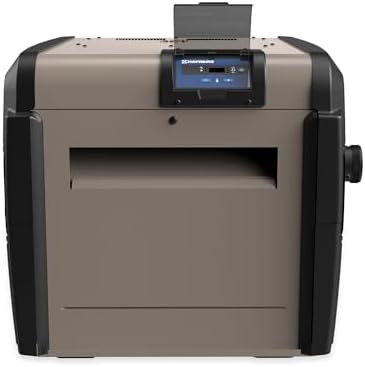
1. Hayward H-Series Natural Gas Pool Heater for Inground Pools 150,000 BTU
Compact 150K BTU unit suits pools up to 450 sq ft with corrosion-resistant cupro nickel exchanger

We researched the Hayward H-Series Natural Gas as a natural gas pool heater for inground pools and spas, sized at 150,000 BTU. The listing rates it for water surfaces up to 450 square feet, so it suits smaller inground pools and spa combinations where a modest heat load is enough.
Homeowners with a compact pool and an existing natural gas line are the buyers this model targets, and the tan cabinet suits equipment pads tucked beside a house or deck.
In our comparison of the listing details, the control panel matters most: an intuitive design with a digital LED display that reports water temperature and runs self-diagnostic checks for easier operation and maintenance. The cupo nickel heat exchanger is built to resist corrosion from unbalanced water chemistry, a real concern in inground pools where pH drifts.
Flexible gas and electric connections can be routed on the right or left side, and the built-in 3/4 inch gas connection simplifies fuel line setup. Low-NOx certification keeps emissions in line with air quality rules, and the design reduces circulation pump run time for energy savings. The cabinet measures 29.5 inches long, 19 inches wide and 24 inches high at 150 pounds.
The main trade-off is capacity. At 150,000 BTU the listing caps coverage at 450 square feet, so larger inground pools will fall short on heat. Buyers with bigger pools or faster heat demands should pick a larger model instead.
2. Hayward H-Series Natural Gas Pool Heater for Inground Pools 250,000 BTU
250K BTU model covers up to 750 sq ft with same durable cupro nickel construction
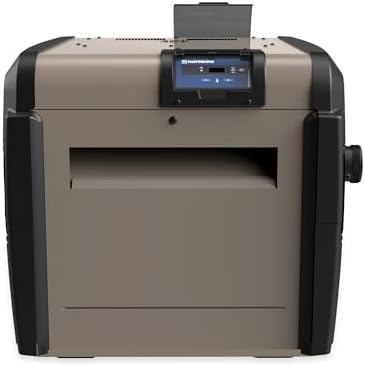
Natural gas heating at 250,000 BTU is what the Hayward H-Series Natural 250,000 brings to an inground pool pad. The listing covers in-ground pools and spas up to 750 square feet, which puts it in range for mid-size inground pools that need more heat output than the smaller 150,000 BTU version. Owners with a family pool and a natural gas hookup are the intended buyers, and the tan cabinet fits standard equipment areas.
The control panel uses a digital LED display to hold water temperature and monitor heater performance through self-diagnostic capabilities. A cupo nickel heat exchanger guards against corrosion caused by unbalanced water chemistry, a common issue in inground pools with fluctuating pH. Gas and electric connections can be made on the right or left side, and the built-in 3/4 inch gas connection eases fuel line work.
Low-NOx certification covers emissions, and the design cuts circulation pump run time for energy savings. The unit measures 29.5 inches long, 25 inches wide and 24 inches high, weighing 171 pounds.
The trade-off is footprint and weight. At 171 pounds and 25 inches wide it needs a sturdy, well-spaced pad, and 250,000 BTU still leaves the largest inground pools short of the 1,200 square foot coverage offered by bigger models in the line. Buyers heating a very large pool should choose a higher output unit.
3. Hayward H-Series Natural Gas Pool Heater for Inground Pools 400,000 BTU
400K BTU heater handles pools up to 1200 sq ft with cupro nickel exchanger

Looking at the details, Hayward H-Series Natural 400,000 is a natural gas heater built for larger in-ground pools and spas, with the listing sizing it for bodies up to 1200 square feet. That coverage figure is the first thing we check for an inground installation, because surface area and wind exposure drive how much heat a pool loses.
A 400,000 BTU unit like this suits a homeowner who wants a proper whole-pool heater rather than a small spa-only device.
The copper nickel heat exchanger is the detail that matters most for inground water, since unbalanced chemistry is a common cause of corrosion and this material is chosen to resist it. Low NOx certification keeps the unit within emissions rules that many areas apply to gas appliances. A digital LED display with self-diagnostic capability lets you set temperature and see fault codes without guessing.
Flexible gas and electric connections on either side, plus a built-in 3/4 inch gas connection, simplify fuel line routing during install. The listing also notes reduced pump run time as an energy benefit.
The main limit is the gas supply itself. A 400,000 BTU appliance draws heavily on the line, so the meter and pipe run need to support it, and that is a job for a licensed installer. Buyers with a small pool, a tight pad or a weak gas service should look at a lower output model instead. The Hayward H-Series Natural 400,000 fits larger in-ground pools where the gas infrastructure is already in place.
4. Pentair EC-462024 -Natural Gas
125K BTU natural gas heater with 82% efficiency for pools up to 15,000 gallons

Pentair EC-462024 -Natural Gas is a 125K heater aimed at smaller bodies of water, and the listing names in-ground pools up to 15,000 gallons alongside aboveground pools and spas. For an inground pool that size, a lower output unit can make more sense than a huge burner, because it cycles less and fits a standard gas line.
The almond cabinet measures 22.5 by 36 by 25 inches, so it takes up modest space on an equipment pad. Homeowners with a compact pool and a normal residential gas service are the natural audience here.
Efficiency is the headline in the data, with an 82% energy efficiency figure the listing calls highest in class. Pre-mixed combustion technology is stated to deliver ultra-fast heat up, which matters on a cool morning when you want the pool ready. The 1-1/2 inch plumbing connection suits the smaller pipework common on inground pools of this size.
A digital display and controller handle temperature setting and operation. Premium features are packaged into what the listing describes as an affordable heater.
The trade-off is capacity. At 125K, this unit is sized for pools up to 15,000 gallons, so a large inground pool will not heat well and will struggle to hold temperature in cool weather. Buyers with a big pool, a long season or high wind exposure should choose a higher BTU model instead. Pentair EC-462024 -Natural Gas suits smaller in-ground pools where efficiency and a quick warm up matter more than raw output.
5. Pentair EC462025 MasterTemp 125 125,000 BTU Compact Energy Efficient Swimming
Propane-powered 125K BTU heater for small pools and spas up to 15,000 gallons
Propane gas fuels the Pentair MasterTemp 125, a heater built for smaller bodies of water. The listing positions it for inground pools up to 15,000 gallons, along with spas and aboveground pools. For an inground pool on the smaller side, that capacity match matters because an oversized heater wastes money and an undersized one never keeps up with cool nights.
The compact footprint and 1-1/2 in. plumbing connection also suit tight equipment pads where a full-size unit will not fit.
What we found most useful in the data is the 82% energy efficiency figure, which Pentair describes as the highest in its class. Pre-mixed combustion technology is listed for ultra-fast heat up, so the pool reaches temperature sooner after you fire it. A digital display and controller handle the settings without fuss. The unit weighs 120 pounds, which keeps installation manageable for a small inground setup.
The trade-off is capacity. At 125,000 BTU, this heater is aimed at pools up to 15,000 gallons, so a larger inground pool will outrun it and heat slowly. Buyers with bigger water volume or a long swim season should look at a higher-output model instead. Pick this one when your inground pool is modest in size and you want efficient, quick heating without a huge unit on the pad.
6. Raypak Avia 264K BTU Natural Gas Pool Heater for Inground
264K BTU natural gas heater with built-in Wi-Fi and copper heat exchanger for smart control

Raypak Avia 264K BTU is a natural gas pool heater built for inground pools, and the 264,000 BTU rating with a copper heat exchanger points to a full-size pool that has to hold temperature through cool evenings and shoulder seasons. Built-in WiFi and the Raymote app let you manage temperature, schedules and diagnostics from your phone, which helps when the equipment pad sits far from the house.
We researched this model as the kind of heater a pool owner considers when convenience and output both matter, and owner feedback commonly describes it as a straightforward fit for a standard inground setup.
From the listing, the corrosion-resistant stainless steel cabinet and patented straight tube copper heat exchanger are the durability points we weighed most, and the design is stated to allow easy access for annual maintenance. The drop-in design with standard connections is stated to speed up installation, and the 84% efficiency figure supports long-term running and compliance with evolving standards.
A 3-year warranty backs the unit, and the app needs no extra panels for full control, automation and energy-saving scheduling, which keeps the setup simpler. We also compared the dimensions and weight, since the unit measures about 38 inches tall and 203 pounds.
The main trade-off is weight and footprint: at 203 pounds and roughly 38 inches tall, this heater needs a solid pad and clearance, so cramped equipment areas may not work, and it runs on natural gas, so homes without a gas line need a different fuel option. Pick something else if your pad is tight or your pool is small.
7. Raypak 206
206K BTU digital electronic ignition natural gas heater with small footprint

On paper, We researched the Raypak 206 as a natural gas pool heater for inground pools, and our comparison of the product data shows it is built for smaller to mid-size pools where a full-size unit would be more capacity than needed. The digital electronic ignition and compact dimensions, at 40 inches long, 28 inches wide and 20 inches high, make it a practical fit for a crowded equipment pad.
Owners commonly report that this size class suits a straightforward replacement job rather than a large pool build.
Among the features the listing states, the intermittent spark ignition pilot safety control matters most because the pilot only comes on when there is a call for heat, so gas is not burned while the pool sits idle. The space-age material is designed so the heater won’t retain residual heat after it is turned off, which allows installation without costly metal heat sinks.
We also noted the high efficiency rating and the 187 pound weight, both of which support a unit that is easier to place and service on a tight pad. The part number is 009216 and the model is P-R206A-EN-C.
The trade-off follows from the 206,000 BTU output: this heater will struggle to keep up with a large inground pool or a spa that needs fast heat recovery, and owners pushing a long season in a cold climate often want more capacity. Anyone heating a big pool should pick a higher output unit instead, while the Raypak 206 suits the smaller inground pool owner who values a tight footprint and simple pilot safety.
8. Penteir Master Temp Heater Natural Gas Heater for Inground Pool & Spa

Penteir Master Temp Heater is a natural gas heater built for inground pools and spas, sized at 250,000 BTU for owners who need more heating capacity than a small unit delivers. Our research team compared the listing details with owner feedback and expert research on residential pool heating, and this model suits mid-size inground pools where faster warm-up matters.
The almond cabinet measures 35 inches high, 28 inches long and 35 inches wide, so we suggest planning clearance on the equipment pad before ordering.
From the product data, the rotating digital control panel offers easy viewing and user-friendly menu navigation for simple operation and diagnostics, which helps when the heater sits at an awkward angle on the pad. Certified low Nitrogen Oxide emissions make it an environmentally responsible choice where air quality rules apply, and compatibility with Pentair equipment means it can slot into an existing Pentair setup.
The listing also notes a 400,000 BTU version for buyers who need more capacity, and the package contains one unit.
The generic brand label sits alongside Pentair as manufacturer and in the compatibility claims, so we recommend confirming the fit against your specific equipment before committing. Buyers with a very large inground pool or a strict brand-matched system may prefer a clearly branded unit. This heater suits the pool owner who wants digital controls, low NOx operation and Pentair compatibility at 250,000 BTU.
9. Raypak BTU Natural Gas
336K BTU natural gas heater with copper exchanger and self-diagnostic ignition
High output defines the Raypak BTU Natural Gas, a unit built for larger inground pools where the heater has to move a serious amount of heat into a big body of water. The 336000 BTU rating and 230 pound build point to a full size installation, not a small spa or above ground setup.
Owners with sizeable inground pools are the buyers this model is aimed at, and it suits a permanent equipment pad with a proper gas supply. In our research we compared the listed capacity against the kind of pool volume it is meant to serve, and the numbers place it firmly in the larger-pool category rather than the compact end of the range.
What matters most on an inground install shows up in the listing. The integral fin copper exchanger tube is the core of heat transfer, and copper is the familiar choice for pool water chemistry. Corrosion free polymer headers help the unit cope with the moisture and chemical exposure that come with a pool pad.
Backlit LCD controls make the settings readable, and the self diagnostic microprocessor controlled ignition gives the heater a way to report faults instead of failing silently. The 230 pound weight tells you it needs a solid, level base.
The trade off is scale. This is a big, heavy heater, and the high output only pays off when the pool volume and gas supply can support it. A buyer heating a small inground pool or a spa would be overbuying, and someone without room for a 230 pound unit on a stable pad should look at a smaller model.
10. Raypak 105
105K BTU natural gas heater with analog thermostat for above ground pools and spas

At first glance, the Raypak 105 is a natural gas pool and spa heater rated at 105,000 BTU, sized for above ground pools, smaller inground pools and spas. Our research team looked at the product data, owner feedback and expert research to see where this unit fits, and the answer is a modest water volume: a plunge pool, a small inground pool or a spa.
At 102 pounds, it is light enough for a simple equipment pad, and buyers with limited space and a small body of water are the ones this heater suits.
What the listing states matters most for installation. The unit ships with a standard 120v three prong power cord and can be converted to 220v, giving some flexibility at the pad. The analog thermostat dial is a simple way to set pool and spa temperature accurately without menus.
The gas connection is 1/2 inch NPT and sits 4 5/8 inches off ground level, and the cabinet measures 27.5 inches high by 12 inches wide by 24 inches deep, so the footprint is compact. Raypak describes it as fully serviceable and built for years of operation, and owners commonly report that the simple controls and serviceable design are easy to live with.
The trade-off is capacity. At 105,000 BTU, this heater will struggle to keep up with a large inground pool, particularly in cool weather or across a long heating season. Anyone heating a big pool should pick a higher output model, and this one is better matched to a small pool or spa.
How We Picked
Our picks come from product details and from what buyers say in customer reviews, not from advertising. We studied the specifications listed for each model and read through owner feedback to see how these heaters hold up in real pools. Marketing claims were set aside.
For this kind of product, we compared heat output, fuel type and installation needs. We looked at sizing for different pool volumes, the materials used in the heat exchanger, and the controls each unit offers.
Praise and complaints repeat in a pattern across owner reviews. Buyers often mention fast heating and steady performance, while some raise concerns about noise, corrosion or service needs over time.
Ordering was set so different needs and budgets are covered. Smaller pools and tighter budgets sit alongside larger, higher output units for bigger volumes. That way a buyer can match a heater to pool size, gas supply and available space without scrolling through unrelated options.
Frequently Asked Questions
What Decides the Running Cost of a Gas Pool Heater for Inground Pool Use?
Running a gas pool heater for an inground pool comes down to a few things we look at in our research. The size of the pool matters most, because a larger water volume takes more heat to raise and hold at temperature. The temperature you set and the gap between that and the outside air also drive how long the burner stays on.
Heat loss is the other big factor, and an inground pool loses heat through the surface, the walls and the plumbing, so a cover and good insulation reduce how often the heater fires.
Efficiency of the unit itself shapes the rest. A condensing gas pool heater for inground pool setups captures more heat from the same gas, while a standard unit vents more away.
Can a Gas Pool Heater for Inground Pool Run Overnight or While Nobody is Watching?
Most gas pool heater for inground pool units are designed for automatic operation, so they can run on a schedule or hold a setpoint without someone standing next to them. In our research we look at the controls each model offers, because a digital thermostat, a timer and safety lockouts are what let a heater run unattended with confidence. A heater that only has a basic on and off switch gives you less control over when it fires.
Leaving it running overnight is common for owners who want the pool ready in the morning, but the conditions matter. An inground pool loses heat after dark, so the heater works harder against that loss, and a cover cuts the run time. We also check the safety features in the product data, such as flame supervision, overheat cutoffs and venting requirements.
What Size Gas Pool Heater for Inground Pool Do I Need for My Pool Volume?
Sizing a gas pool heater for inground pool use starts with the water volume and the surface area, not the heater alone. We research the BTU output of each unit and match it against the pool size, because an undersized heater runs constantly and struggles to reach the setpoint.
Surface area matters too, since an inground pool with a large open expanse loses more heat than a compact one. The temperature you want to gain and how fast you want to gain it also feed into the choice.
The other half of the fit is the gas supply and venting. A larger gas pool heater for inground pool installation needs a gas line sized for its demand, and the venting route has to suit the unit and the space around it.
How Noisy is a Gas Pool Heater for Inground Pool Equipment Areas?
Noise from a gas pool heater for inground pool equipment comes from the burner, the blower and the water flow through the exchanger. In our research we look at how each unit is built, since a sealed combustion design and a well insulated cabinet tend to keep sound lower. Placement matters as much as the unit, and an inground pool equipment pad close to a seating area or a neighbour’s fence carries more sound than one set back.
Owners commonly report that the loudest moments are at startup and during a long recovery run, while steady holding is quieter. We compare the product data for blower design and cabinet construction rather than quoting decibel figures we cannot verify. If the pad sits near a window or patio, orienting the vent away and giving the heater clearance helps.
Is a Gas Pool Heater for Inground Pool Safe Around Children and Pets?
Safety around a gas pool heater for inground pool equipment starts with the installation, not the family. We research the clearances each unit requires and the venting rules, because a heater needs space around it and a vent that carries exhaust away from windows, doors and play areas.
The cabinet surface gets hot during operation, so a barrier or a fenced equipment pad keeps children and pets from touching it. Gas connections and the exhaust path should be checked by a qualified installer.
In our comparison we also look at the safety controls in the product data, such as flame supervision, overheat protection and low water flow cutoffs. Those features shut the burner down when something is wrong, which matters in a household with kids and animals.
Can I Plug a Gas Pool Heater for Inground Pool into an Extension Cord or Power Strip?
A gas pool heater for inground pool use still needs electricity for its controls, blower and ignition, and that power draw should come from a dedicated circuit. In our research we check the electrical requirements in the product data, because a heater on a shared circuit can trip a breaker or lose its ignition sequence.
An extension cord or a power strip is not the right way to feed pool equipment, since outdoor runs, moisture and load all add risk. A qualified electrician should wire the unit to a properly protected outdoor circuit.
The gas side has its own rules, and the electrical supply has to be in place before the heater can run safely. We compare the installation notes for each gas pool heater for inground pool model because bonding, grounding and weather protection all matter near water.
Final Thoughts
After comparing specs, owner feedback and expert research, our pick for the best gas pool heater for inground pool is the Hayward H-Series Natural Gas. The Hayward H-Series Natural 250,000 suits smaller inground pools where a lower output keeps things simple and efficient. For larger pools that need faster heat recovery, the higher output version is the one to consider.
Buyers with tighter equipment pads or specific plumbing setups often prefer a Pentair model, while budget-focused shoppers lean toward the compact Raypak options. Each has its place, and the right choice depends on pool volume and how quickly you want the water warm.
Match the heater’s BTU output to your pool size before anything else.