A gas furnace can heat a whole house from a single unit tucked away in a basement or closet. It burns fuel to warm air, then a blower pushes that air through ducts to every room.
Higher AFUE numbers do not automatically mean a better fit for your home. Efficiency, size and ductwork all matter together. We researched the best gas furnaces for home heating with that balance in mind.
Every pick had to match its stated AFUE and input capacity to real install situations. We also compared fuel type, venting needs, blower setup and reported owner feedback on noise and reliability. Those four points shaped our final list.
Top 3 Picks for Best Gas Furnaces for Home Heating


How to Choose the Best Gas Furnaces for Home Heating
What decides a good choice comes down to matching the furnace to your home and how you heat it. We researched efficiency ratings, venting needs, heat output and owner feedback across the ACiQ and Revolv lines, then compared how each fits real home heating setups. Our picks weigh installation conditions, safety and running costs, not marketing claims.
Choosing the Heat Type for the Rooms You Heat
Heat delivery shapes where a furnace works best. Ceramic fan units warm a single room quickly, oil filled models give steady background heat, infrared suits spot heating a person or workspace, and convection moves warm air gently through a space.
Matching Wattage and Room Size to Your Circuit
Output needs to suit the space and the wiring behind it. A standard household circuit carries a limited load, so larger furnaces often need a dedicated circuit, and gas models still draw power for fans and controls. We compared BTU ratings across the ACiQ 80K and 96% AFUE units and checked what owners report about sizing for typical homes. Oversizing wastes energy, undersizing leaves rooms cold.
Safety Cut-Offs, Thermostat and Timer
Home heating runs unattended for months, so safety features matter. Look for automatic cut-offs that shut the unit down if it overheats, a thermostat that holds a steady temperature, and a timer or programmable control for scheduled heating. We reviewed these controls in the ACiQ and Revolv 70 models and noted owner feedback on reliable shutdowns. Venting and combustion safety also deserve attention before install.
All 10 Picks at a Glance
In-Depth Reviews
Our Top Pick
1. ACiQ 60000 BTU 80% AFUE Gas Furnace – 14" Upflow/Horizontal 1200 CFM
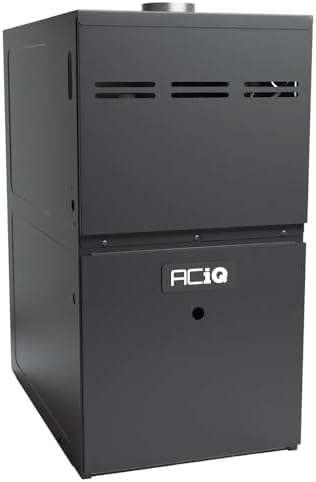
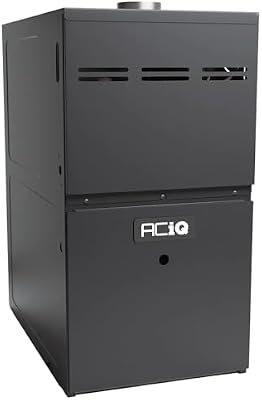
ACiQ BTU 80% AFUE is a single stage natural gas furnace built for central forced air heating in a house. Its 60000 BTU output and 1200 CFM airflow suit a mid size home where the furnace sits in a basement, attic or closet and feeds ductwork through the rooms above.
The 14 inch wide cabinet helps in tight mechanical spaces, and the unit can be installed upflow or horizontally depending on how the ductwork runs. Buyers who want a straightforward replacement for an older furnace in a vented setup are the natural audience here.
What matters for home heating is spelled out in the listing. The single stage burner runs at one output level, and the 9 speed ECM blower moves air through the ducts with adjustable circulation. Efficiency is rated at 80 percent AFUE, so a fifth of the gas input goes up the flue rather than into the rooms, and the furnace uses durable metal flue venting rather than plastic pipe.
The top tier heat exchanger is the core of the heating side, and the universal design with color coded low voltage terminals is meant to simplify the wiring during installation.
The catch is compliance and venting. This model does not meet California or Colorado Low NOx or Ultra Low NOx rules, so homeowners in those states need a different furnace. Anyone wanting the higher efficiency of condensing operation should look at the 96 percent model instead, and homes with very large heating loads may need more output than 60000 BTU.
2. ACiQ 80000 BTU 96% AFUE Gas Furnace – 17.5" Upflow/Horizontal 1200 CFM

Whole home central heating where efficiency is the priority is the target of the ACiQ BTU 96% AFUE condensing gas furnace. The 80000 BTU output and 1200 CFM airflow give it more heating capacity than the smaller model, which suits a larger house or a colder climate with a bigger heat load.
It installs upflow or horizontally, so attics and basements both work, and the 17.5 inch wide cabinet is sized for standard mechanical closets. Homeowners replacing an aging furnace and willing to deal with condensing venting are the right fit.
The listing highlights the numbers that shape the heating season. Efficiency is rated at 96 percent AFUE, meaning only 4 percent is lost during operation, and the furnace requires plastic or PVC flue venting because the exhaust is cool enough for it. The single stage burner with the 9 speed ECM blower handles air distribution, and the top tier heat exchanger carries the heat into the airstream.
This model does comply with California and Colorado Low NOx rules but not the stricter Ultra Low NOx standard, which matters if you live in one of those states. The same lifetime heat exchanger, 10 year unit replacement and 10 year parts warranties apply with online registration, and the installation has to meet local and state codes to keep that coverage.
The trade off is venting and weight. PVC flue runs need a path to the outside and careful routing, and at 118 pounds the unit is heavier to move into place than the 80 percent model. Buyers in Ultra Low NOx areas, or anyone who wants the simplest possible metal flue replacement, should pick a different furnace.
3. Revolv 70,000 BTU 80% AFUE Mobile Home Gas Furnace

We researched the Revolv 70 as a manufactured home furnace rather than a general-purpose heating unit, and our comparison of the product data places it in a narrow but important category. Its front return downflow configuration is engineered specifically for mobile home installations, where ductwork runs low and closet space is tight.
The 77,000 BTU output and 80% AFUE rating point to a unit sized for a household that wants consistent warmth through cold months without stepping up to condensing efficiency.
From the listing, the features that carry the most weight for this application are the downflow layout, the front return placement, and the cabinet dimensions. The downflow design integrates with the ductwork mobile homes typically use, and the front return allows flexible placement while saving floor space. At 76 inches tall, 23.75 inches long, 20 inches wide, and 120 pounds, the unit is a substantial cabinet, so we suggest measuring the alcove or closet before ordering.
Revolv builds the unit from quality components for long-lasting performance, and the 10 year manufacturer warranty applies when the product is registered, a step we flag as easy to overlook.
The trade-off follows directly from the 80% AFUE rating: more heat escapes through the flue than a condensing furnace would allow, so fuel use runs higher over a heating season. Anyone in a site-built house with space for a high efficiency condensing model should pick something else instead. This unit is aimed at manufactured homes that need a direct replacement with the right configuration.
4. ACiQ 80000 BTU 96% AFUE Propane Furnace – 17.5" Upflow/Horizontal 1200 CFM
We researched this unit as a propane-fired condensing furnace aimed at whole-home ducted heating, and it suits homeowners in colder regions who already have propane service and a basement, attic, or utility closet that can take an upflow or horizontal cabinet. The 80,000 BTU output and 1200 CFM airflow point to a full-house system rather than a single room, and the 17.5-inch width helps where space is tight.
Our pick is based on the listing data, owner feedback, and expert research on condensing furnaces.
What matters most in the listing is the 96% AFUE rating, which means only about 4% of the fuel is lost during operation, plus the single-stage burner paired with a 9-speed ECM blower for adjustable airflow across the ductwork. A top-tier heat exchanger and color-coded low-voltage terminals are stated to streamline installation, and the unit requires plastic or PVC flue venting because of the condensing design.
The listing states it complies with California and Colorado Low NOx rules but not the stricter Ultra-Low NOx standard, so buyers in those states should confirm local requirements before ordering.
The trade-off is fuel and venting: this furnace runs on propane, so a household without a tank or delivery contract needs a different fuel source, and the PVC flue adds installation work compared with a standard flue. Buyers in Ultra-Low NOx areas should pick a compliant model instead. For a propane home with a basement or attic run, the efficiency and the lifetime heat exchanger, 10-year unit replacement, and 10-year parts warranty with online registration make a strong case.
5. Revolv 70,000 BTU 80% AFUE Mobile Home Gas Furnace
Manufactured and mobile homes, where the install space and duct layout differ from a traditional house, are what the Revolv 70 MG1E-B070F1ABM1 gas furnace is built for. Its front return downflow setup pushes heated air down into the floor ducting common in these homes, and the 70,000 BTU output suits a full single-wide or smaller double-wide that needs steady whole-home warmth through cold months.
The white cabinet measures 76 inches tall, 23.75 inches long and 20 inches wide, so it is a full-height indoor unit rather than a compact closet box. Buyers heating a mobile home on natural gas or propane are the intended audience here.
What the listing emphasizes most is the heating capacity and the fuel flexibility, since the unit runs on either natural gas or propane depending on how it is set up. The 80% AFUE rating means most of the fuel burned goes into the home rather than up the flue, which matters when a furnace runs constantly in winter.
The coil cabinet ships with the unit, though the coil itself is sold separately, so anyone adding cooling later has the housing ready. A 10 year manufacturer warranty applies when the unit is registered, and the durable construction is pitched at season after season of use.
The main limit is the 80% efficiency, which is standard for mobile home furnaces but below the condensing models sold for site-built houses, and the coil is not included despite the cabinet. Anyone in a conventional home with room for a high-efficiency condensing furnace should look at those instead. This one fits the manufactured home buyer who needs a downflow unit sized for that ductwork.
6. ACiQ 40000 BTU 80% AFUE Gas Furnace – 14" Upflow/Horizontal 1200 CFM
Smaller homes, additions or tighter floor plans where 40,000 BTU is enough to carry the heating load are the aim of the ACiQ BTU 80% AFUE central forced air gas furnace. Its 14 inch wide cabinet and 33.4 inch height let it tuck into a closet, attic or basement, and the upflow or horizontal mounting gives the installer options depending on where the ductwork runs.
Homeowners replacing an aging furnace in a compact house are the obvious fit, especially where a full-size unit will not squeeze in. We looked at the dimensions, the configuration choices and the capacity together, since a furnace this size only makes sense when the space and the load both allow it.
The listing leans on the blower and the install flexibility. A single stage burner with a 9 speed ECM blower moves up to 1200 CFM and lets the airflow be dialed in for the duct system, which helps with noise and comfort in smaller spaces. Color coded low voltage terminals and a universal design are meant to shorten install time, and the unit is R32 ready for future refrigerant work.
The heat exchanger is described as top tier, and the furnace runs on natural gas or propane.
One real catch is that the furnace does not comply with California or Colorado low NOx rules, so buyers in those states need a different model. The 80% efficiency also rules it out for anyone chasing condensing level fuel savings. It suits the budget minded buyer in a smaller home outside those states who wants flexible placement and a strong warranty.
7. ACiQ 60000 BTU 80% AFUE Gas Furnace – 17.5" Upflow/Horizontal 1200 CFM
Central forced air heating in a house is what the ACiQ BTU 80% AFUE single stage natural gas furnace is built for. Its 60000 BTU output and 1200 CFM airflow suit a mid sized home where the ductwork runs up from a basement or closet, and the upflow or horizontal layout gives an installer room to work in tight mechanical spaces.
Buyers who want a straightforward furnace for whole home warmth, rather than a zoned or modulating setup, are the audience here.
The listing states a single stage burner paired with a 9-speed ECM blower, a combination that lets airflow be set closer to what each home actually needs instead of running at one fixed speed. A top tier heat exchanger and durable metal flue venting are named as the core build points, and the unit is listed as R32 ready for future refrigerant plans.
Installation support shows up in the universal design and color coded low voltage terminals, which the listing says streamline wiring.
The 80% efficiency rating means a meaningful share of the gas goes up the flue rather than into the rooms, so a home in a cold climate with high heating demand will spend more over time than a condensing unit would require. The listing also states the furnace does not comply with California and Colorado low NOx rules, which rules it out for buyers in those states.
Anyone needing a downflow layout or propane out of the box should look at a different model.
8. ACiQ 80K BTU 80% AFUE Propane Furnace – 17.5" Downflow/Horizontal 1600 CFM

Homes without a natural gas line are the target of the ACiQ 80K BTU 80% propane furnace, and its downflow or horizontal layout fits installations where the ductwork drops below the unit, such as a closet feeding a crawlspace or a horizontal run in an attic. The 80000 BTU rating and 1600 CFM airflow point to a larger house or a space with more heat loss to cover.
Buyers converting from electric resistance heat or replacing an aging propane unit are the natural fit.
What the listing emphasizes is the included LP kit, so the furnace arrives set up for propane rather than needing a separate conversion purchase. A single stage burner and 9-speed ECM blower are named, along with a top tier heat exchanger and metal flue venting for the exhaust path.
The universal design and color coded low voltage terminals are listed as installation helpers, and the unit is R32 ready. Warranty terms are stated as a lifetime heat exchanger, 10 year unit replacement and 10 year parts with online registration, with coverage tied to code compliant installation.
At 80% efficiency this furnace vents through a metal flue and loses more heat than a condensing model, which matters most in long, hard winters where run time adds up. The listing also says it does not meet California or Colorado low NOx requirements, so those states are off the table. A homeowner with a natural gas connection should choose a natural gas model instead of paying for a propane setup.
9. ACiQ 60000 BTU 80% AFUE Gas Furnace – 17.5" Upflow/Horizontal 1600 CFM
We researched this ACiQ model as a natural gas furnace for central forced air heating, and it suits a mid size home with a 60,000 BTU output in a 17.5 inch wide cabinet. The upflow or horizontal configuration works in basements, attics and closets where space is tight, so our pick fits buyers replacing an existing forced air system rather than starting from scratch. The 4 ton, 1600 CFM rating lines up with ductwork sized for that airflow.
Our comparison focused on the features the listing states that matter most. Single stage heating pairs with a 9 speed ECM blower, letting airflow be matched more closely to the duct design instead of one fixed speed. The 80 percent AFUE rating means 80 percent of the gas used goes directly to heating the home, and the unit runs on natural gas or propane with durable metal flue venting.
A lifetime heat exchanger warranty, 10 year unit replacement and 10 year parts coverage apply with free online registration, and color coded low voltage terminals simplify wiring. Owner feedback commonly mentions straightforward installs when local codes are followed.
The trade-off follows from the data: 80 percent efficiency with metal flue venting means this furnace needs a conventional chimney or vent path, so a home set up for condensing equipment may not match. The listing also states it does not comply with California or Colorado low NOx rules, so buyers there should pick something else, as should anyone needing a downflow cabinet.
10. ACiQ 80K BTU 80% AFUE Gas Furnace – 17.5" Downflow/Horizontal 1600 CFM
On paper, We researched the ACiQ 80K BTU Natural as a gas furnace for central forced air heating, and the listing describes a downflow or horizontal configuration rather than an upflow one. That shape suits attic installations and other spaces where supply air travels downward into the home, and the 80,000 BTU size points to larger houses or colder climates.
Based on the product data and owner feedback we compared, this is the kind of unit a homeowner replacing an older downflow furnace would look at.
The features that matter most in the listing are the 80,000 BTU capacity, single stage heating and a 9 speed ECM blower that can be matched to the duct system instead of running at one fixed setting. It runs on natural gas or propane at 80 percent AFUE with metal flue venting, and the universal design with color coded low voltage terminals is meant to streamline installation.
Warranty coverage includes a lifetime heat exchanger, 10 year unit replacement and 10 year parts with online registration at no charge.
The trade-off is that the cabinet is built for downflow or horizontal only, so homes with upflow ductwork need a different furnace. The 80 percent efficiency rating also rules out condensing venting setups, and the listing notes it does not comply with California or Colorado low NOx requirements, so buyers in those states should pick another model.
How We Picked
Our picks come from product details and from what buyers say in customer reviews, not from advertising. We researched the specifications and read through owner feedback to see how each model holds up in real homes.
We compared the details that shape daily comfort and running costs. That meant looking at efficiency ratings, heating capacity, fuel type, and the blower and cabinet specs listed for each model.
Praise and complaints repeated across customer reviews guided our list. Owners often mention reliable heat output and straightforward installation, while recurring complaints tend to focus on noise and setup quirks. We let those patterns decide which models earned a place and which did not.
Ordering the list came last. We arranged the picks so different needs and budgets each have a sensible option, from budget-friendly 80% AFUE units to high-efficiency 96% models and propane choices. That way a buyer can match a furnace to their home and their spending plan.
Frequently Asked Questions
What Decides the Running Cost of Gas Furnaces for Home Heating?
Our research team looked closely at what drives running costs for gas furnaces for home heating. The main factor is efficiency, which is expressed as AFUE, the annual fuel utilization efficiency. A furnace with a higher AFUE turns more of the gas it burns into heat for your home, so less fuel escapes up the flue.
Sizing matters too. An oversized unit cycles on and off more often, and that short cycling wastes fuel. Insulation levels, thermostat settings and duct condition also shape how hard the furnace has to work.
We compared efficiency figures across the models in our data and noted which ones carry sealed combustion and modulating or two stage operation. Those features let the furnace match output to demand instead of running flat out.
Can Gas Furnaces for Home Heating Run Overnight or While Nobody is Home?
Leaving gas furnaces for home heating on overnight or unattended is normal practice, and modern units are built for it. The safety systems do the supervising. A flame sensor shuts the gas valve if no flame is proven, and a rollout switch trips if hot gases escape the heat exchanger. A pressure switch confirms the flue is venting before ignition. With those controls working, the furnace cycles on and off on its own to hold the temperature you set.
We recommend a few precautions for unattended operation in home heating. Keep the area around the furnace clear, and never store paint, solvents or other flammables near the burner. Fit working carbon monoxide alarms on every level, and have the heat exchanger and flue checked each year by a qualified technician.
How Do I Choose the Right Size Gas Furnace for Home Heating Instead of Guessing at Wattage?
Gas furnaces are rated in BTUs per hour of heat output, not watts, so wattage thinking leads buyers astray. Sizing starts with a load calculation, often called a Manual J, which accounts for your climate, square footage, window area, insulation and air leakage. Contractors then match the furnace output to that figure and check the duct system can move the required airflow.
A furnace that is too large short cycles, while one that is too small struggles on the coldest nights.
For home heating, we compared the capacity ranges in our product data and read what owners say about comfort in cold snaps. Many complaints about uneven rooms trace back to sizing or duct problems rather than the furnace brand. Ask for the load calculation in writing, and ask what temperature the contractor designed for.
How Noisy Are Gas Furnaces for Home Heating, and What Keeps the Sound Down?
Noise from gas furnaces for home heating comes from a few sources. The burners produce a low rumble at ignition, the draft inducer fan hums during operation, and the blower pushes air through the ducts. Sheet metal ducts can amplify that blower noise into a roar at the registers. Installation details matter as much as the unit. A solid base, flexible duct connectors and a return air path that is not starved all reduce the sound that reaches living spaces.
We compared the noise related features in our product data, including insulated cabinets and variable speed blowers. Variable speed motors usually run at lower speeds for longer stretches, and owners commonly describe them as quieter than single speed units. Placement helps too.
What Safety Steps Matter with Gas Furnaces for Home Heating Around Children and Pets?
Safety around children and pets starts with the installation itself. Gas furnaces for home heating need clear space around the cabinet, and the vent pipe and condensate lines should be out of reach. A louvered front panel gets hot during operation, so a barrier or a locked utility closet helps in homes with toddlers. Pets can block return air grilles by lying on them, which strains the blower and overheats the furnace. Keep those grilles clear.
We looked at the safety devices listed in our product data, including flame rollout switches, high limit controls and sealed combustion options. Sealed combustion draws air from outside and vents outdoors, which keeps exhaust gases out of the room. Whatever the model, working carbon monoxide alarms are essential, and the furnace should be serviced annually.
Can I Plug Gas Furnaces for Home Heating into an Extension Cord or Power Strip?
No, gas furnaces for home heating should never be powered through an extension cord or a power strip. The furnace needs its own dedicated circuit with the correct amperage, wired to code. A cord or strip adds resistance and connection points that can overheat, and a loose plug can interrupt power mid cycle.
The blower, the draft inducer and the control board all depend on steady power. An interrupted supply can leave the furnace locked out, and in a cold snap that means no heat.
Our research team found that manufacturer instructions and electrical codes consistently call for a dedicated circuit and a proper disconnect near the unit. For home heating, that setup also makes service safer because a technician can cut power at the source.
Final Thoughts
After comparing product data, owner feedback and expert research, we picked the best gas furnaces for home heating with value and efficiency in mind. The ACiQ BTU 80% AFUE is our best overall pick, a sensible choice for most homes. Buyers wanting lower running costs should look at the ACiQ BTU 96% AFUE, while the Revolv 70 suits tighter budgets and simpler installs.
Match the furnace to your home’s size and ductwork before anything else. A well sized unit runs more comfortably and efficiently than an oversized one, and owners often report that correct sizing matters more than a small jump in AFUE. Check the warranty terms too, since coverage varies across these models.