Cold snaps expose every weak point in an off-grid setup. Frozen lines, a fire that will not hold overnight and a house that never quite warms up all cost you comfort, safety and money.
A capable furnace turns that around. Steady heat through the night, less wood burned for the same warmth and a fire you can trust in bad weather. Our research points to the best outdoor wood furnace for off-grid heating as one that balances all three.
Cabins, workshops and remote homes each ask something different of a furnace, so we matched picks to those uses. We compared firebox size, burn time, heat output and how much wood each unit takes to run through a cold night.
Top 3 Picks for Best Outdoor Wood Furnace for Off-Grid Heating


How to Choose the Best Outdoor Wood Furnace for Off-Grid Heating
Choosing an outdoor wood furnace comes down to matching the unit to your site, your fuel and your power budget. We compared product data, owner feedback and expert research on how these furnaces behave without mains electricity. Heat output, draw on a single circuit, and safety controls matter more than showroom features when the grid is gone.
Heat Type and the Space It Suits
Ceramic fan heaters push warm air quickly and suit well-insulated cabins where fast heat matters. Oil-filled units radiate steady, gentle warmth and hold it after the burner stops, which helps in drafty rooms. Infrared warms people and objects directly, so it fits open porches and workshops. Convection units move air through the firebox and chimney, giving even heat across a whole small building.
Wattage and Room Size
Off-grid, every watt comes from your battery bank or inverter, so we look at the furnace’s draw against what one household circuit can carry. A single circuit typically handles a modest load, and owners commonly report that high-draw fan-assisted models strain small solar setups. Match the unit to the room’s volume and insulation, and size the circuit with headroom for start-up surges. Oversized furnaces cycle hard and waste fuel.
Safety Cut-Offs, Thermostat and Timer
Without grid power, controls must work on their own. We checked for overheat cut-offs, low-water protection and gravity or mechanical thermostats that keep working when electronics fail. Timers help hold fuel and battery use down through the night. Simple, serviceable controls beat complex panels off-grid, because a failed board far from a dealer can leave you without heat.
Quick Comparison
In-Depth Reviews
Our Top Pick
1. HeatMaster Outdoor Wood Furnace Door Seal Kit | 1" X 10'
Door seal kit with 1-inch by 10-foot fire rope gasket and silicone tube for HeatMaster boilers

On paper, this is a door seal kit for a HeatMaster boiler, not a furnace itself, and it is the maintenance part that keeps an existing unit burning properly once the original gasket wears out. Our research team looked at the listing details and owner feedback on this type of replacement seal, and we picked it out for the owner who already runs a HeatMaster unit and wants to keep the door closing tightly through a long heating season.
A leaking door lets air in uncontrolled and wastes wood, which is a real problem for anyone heating a cabin or workshop away from the grid.
What the listing states matters most here: the fire rope gasket is made to fit HeatMaster boilers and measures one inch by ten feet, the length needed to run around a boiler door, and a tube of silicone comes in the box for easy installation so the seal can be set without hunting for separate adhesive.
The stated purpose is to keep the wood boiler in top operating condition and maintain full burn efficiency by sealing the door. In an off-grid setup, that matters because every bit of wasted heat is wood that has to be cut and carried by hand.
The trade-off is plain. This is a gasket and silicone kit only, so it does nothing for a boiler with a warped door, a cracked firebox or a bad chimney. Anyone who needs a complete furnace, or who has not confirmed their unit is a HeatMaster model, should pick something else, and buyers should check fit before ordering since the kit is made for that one brand.
2. Trailblazer Cookstove Wood Stove with Oven for Off-Grid Living
Solid-steel cookstove with full-size baking oven and removable cooktop rings for versatile off-grid meals

Trailblazer Cookstove is a wood stove with a full oven, built for off-grid living, camping, RV setups, hunting camps, tiny homes and emergency backup. Solid steel construction and folding legs point to a unit meant to be moved and set up again rather than installed once. It suits the person who needs both heat and real cooking from the same fire, in a cabin, tent or basecamp where there is no grid power and no propane oven.
The listing states removable cooktop rings and two heat zones, so a user can boil, simmer, fry and bake on one firebox. A reversible grill and griddle is included for direct flame searing or flat top cooking. The oven is full size and fits a standard 13×9 pan with room to spare, which covers bread, casseroles and roasts.
An adjustable air slider and built in flue damper help control the burn, and the maker says low smoke and balanced heat depend on dry wood and a proper chimney setup. At around 50 pounds with folding legs, all pipe sections and accessories pack inside the firebox for transport.
The limit is that this is a portable stove, not a whole home heating appliance, and the listing ties safe indoor use to proper venting, a heat shield under the stove and carbon monoxide awareness. Anyone wanting to heat several rooms, or unwilling to manage a chimney and dry wood supply, should pick a different setup. Buyers who want a compact, packable stove and oven for a camp or cabin are the right fit.
3. Cast Iron Wood Burning Stove Large Fire Box Pull-Out Ashpan Off Grid
Thickened cast iron stove with sealed furnace lid and large fire box for reliable winter tent heating

We researched this unit as a cast iron stove built around a large fire box, and it suits off-grid cabins, hot tents and base camps where one unit has to handle both heat and cooking. The flat cooktop is meant for boiling water and preparing hot meals, while the fireproof insulated sealing door is designed to stop smoke leakage into the shelter.
For anyone heating a remote space without utility power, that pairing of radiant warmth and a usable cooking surface is the central appeal in the listing.
Our comparison of the product data flagged several details that matter for off-grid use. The sealed lid with viewing glass lets the flame be monitored without opening the door, which the listing ties to limiting smoke in a tent. A large-diameter thickened smoke outlet is stated to keep draft smooth, and the stove accepts firewood, straw, coal and corn cob when one fuel is scarce.
The pull-out ashpan simplifies disposal after long burns, and the cast iron structure is described as resisting warping under continuous high heat; owner feedback we reviewed commonly centers on steady warmth and simple ash cleanup.
The trade-off is weight and bulk. Cast iron this thick is not something to carry far from a vehicle, so it fits a cabin or a base camp more than a backpacking trip. Anyone who needs to move a stove between sites on foot should pick something else, and buyers wanting a lighter steel model should consider the Camping Wood Stove instead.
4. Camping Wood Stove, Multifunction Wood Burning Stove with Grill Rack
Steel and stainless steel stove with three wok rings and tripod design for stable outdoor cooking

At first glance, We researched the Camping Wood Stove as a portable steel hot tent stove with chimney pipes and a grill rack, the kind of unit aimed at campers, backyard cooks and off-grid living where a fire has to travel and still hold up outdoors. The listing describes steel and stainless steel construction joined by welding, with properties stated to withstand fire, heat and rust, which matters for a stove that sits outside in rough weather.
Its tripod design and 2 mm steel plate are listed as giving it a stable footing, and the overall shape suits a vehicle-based camp kitchen rather than a backpacking setup.
Comparing the stated features, the carry and cooking details drew our attention. Three precision-sized wok rings are said to support cookware spanning 9.84 to 17.72 inches, covering woks, pots and skillets, while the ash filter is designed to sift ash evenly and keep the surrounding area cleaner. Dual handles are placed for lifting, and the stove can be disassembled into a car trunk or a storage bag for transport and storage.
The trade-off is that the storage bag is not included, and at 28.11 pounds the stove is a vehicle-based portable rather than something to carry on foot, so buyers planning to hike a stove deep into the backcountry should pick a lighter option. Campers who drive to their site and want a sturdy steel cooker with flexible ring support will find this one a sensible fit.
5. Small Wood Stoves for Heating Large Fire Box Pull-Out Ashpan Off Grid
Cast iron multi-fuel stove with sealed insulated glass door and slide-out ashpan for cabin use

In plain terms, We researched this compact cast iron stove as a heating and cooking option for cold-season hot tent camping, hunting camps and off-grid cabins. The listing describes it as a multi-fuel unit with a sealed insulated glass viewing door, a flat cooking top and a pull-out ashpan, sized to fit small camp layouts.
Our comparison of the product data and owner feedback points to it as a choice for campers, hunters and cabin owners who want warmth and a cooking surface without relying on grid power.
The features that matter most in the listing are the thickened cast iron construction, which is described as standing up to continuous high heat on multi-day trips, and the optimized smoke outlet that delivers steady draft to limit smoke drift. The sealed insulated glass door blocks smoke leakage while letting you watch the flame, and the flat top supports both heating and cooking.
It burns firewood, straw, coal or corn cobs, and the slide-out ashpan lets you clear residues quickly without stirring up dust, which owners commonly mention as useful in a cabin or tent.
The trade-off follows from the compact footprint the listing specifies: the fire box is small, so long cold nights mean frequent reloading and there is less room for large pots. Anyone heating a large space or cooking for a crowd should pick a bigger stove with a larger firebox instead.
6. Portable Wood Stove with Chimney Thickened Carbon Steel Off Grid Cooking
Thickened carbon steel stove with double-layer oven and large firebox for homestead cooking

Looking at the details, We researched this Portable Wood Stove as a thickened carbon steel cook-and-heat unit with a chimney, a large capacity firebox and a double-layer oven, and it suits small farm homesteads, remote ranch work crews and permanent group campsites where cooking and heating share one spot.
Its two-tier oven bakes corn, potatoes and bread at the same time, while the top cook surface handles daily simmering and frying, and the wide cooktop lets owners prepare big batch meals for backyard family gatherings and cold patio evenings.
Among the features our comparison flagged as most important, the extra-large firewood loading opening accepts whole unsplit logs to save prep time, and the replaceable cast iron furnace grate means the grate gets swapped rather than the whole stove when it wears. Double-sided reinforcing ribs resist high heat deformation for long-term use, non-slip rubber feet keep the unit stable on uneven floors, and the pull-out ember drawer cuts messy ember cleanup time.
Multi-fuel compatibility covers firewood, corn cobs, charcoal or corn stalk, which owners commonly report as useful for rural power outages and emergency backup cooking.
The trade-off is that the large firebox and double oven that make this stove capable also make it awkward to move between sites, so it fits a fixed base camp better than a weekend carry. Buyers who need to pack a stove in and out on every trip should pick a lighter, more compact model instead.
7. Trailblazer Cookstove Wood Stove with Oven for Off-Grid Living
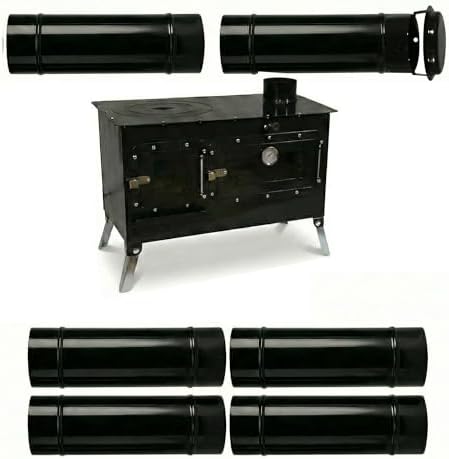
Feature for feature, Trailblazer Cookstove Ice is a portable wood stove with a real baking oven, sold as the most affordable 19th century style cookstove available. It suits off grid cabins, camps, RV setups, hunting basecamps, ice shanties and prepper shelters where one fire has to handle both heat and meals.
The solid steel body, folding legs and gasket free door point to long service in remote settings. At about 50 lbs it is heavy enough to feel planted but still movable between a vehicle and a shelter.
What matters most for off grid heating is the control the listing describes. The adjustable air slider and built in flue damper let you balance the burn against a chimney setup, which is how you get steady heat and low smoke from dry wood. Two heat zones, removable cooktop rings and the reversible grill and griddle cover boiling, simmering, frying and searing.
The full size oven fits a standard 13 by 9 pan with room to spare, so bread and casseroles are realistic. All pipe sections and accessories pack inside the firebox, and the stove burns wood, charcoal or coal.
The trade off is weight and setup demand. Fifty pounds plus pipe sections is a lot to haul any distance, and safe indoor use depends on proper venting, a heat shield under the stove and carbon monoxide awareness. Buyers who want a light stove for quick backpacking trips, or who cannot commit to a chimney and floor protection, should pick a simpler folding stove instead.
8. Camping Wood Stove, Multifunction Wood Burning Stove with Grill Rack
High-class steel stove with four furnace rings of different sizes and sturdy legs for stability

By design, We researched this model as a portable steel hot tent stove with chimney pipes and a grill rack, aimed at outdoor cooking, heating, backyards and off grid living. At about 28 lbs and roughly 20.5 inches square by 22.44 inches tall, it is sized for buyers who move camp and want quick installation and takedown. The detachable structure supports that use, and owner feedback commonly mentions the convenience of packing it up between trips.
Our comparison of the listed features points to the chimney design first, since it guides smoke exhaust and improves combustion efficiency in a shelter with limited draft. High class steel with integrated compression technology is stated to withstand high heat and extend longevity, which matters for a stove that runs hot.
Four furnace rings of different sizes let owners match the opening to their cookware, and the sturdy legs add stability against shaking or tipping. The moderate leg height also keeps cooking and fire monitoring convenient.
The trade-off is that the listing gives no flue damper or air control, so fine tuning the burn for long overnight heat is harder than on stoves with an adjustable slider. Buyers heating a large cabin through cold nights, or wanting an oven for baking, should pick a heavier stove with damper control. This one suits short trips and simple shelter heating.
9. Multifunction Wood Burning Stove Portable Camping Rocket Stove
Steel stove with three adjustable stove rings and 330 lbs capacity for versatile outdoor cooking

From the product details, We researched this product as a steel multifunction wood burning stove that also works as a space heater for off-grid setups. Its 24.25 pound weight and detachable parts make it a car-camping or backyard appliance rather than a backpacking one. We compared it with other portable rocket stoves and picked it for buyers who want one unit to burn wood, charcoal or gathered branches for both cooking and warmth on a patio, at a campsite or in simple off-grid living.
From the listing, the chimney design is stated to enhance combustion and direct smoke away, which matters when airflow is limited. The lockable furnace door allows refueling while containing embers and flames, and the integrated ash box collects residues for cleaner operation. We noted the three stove rings at 14.9, 16.9 and 18.9 inches plus the stainless steel grate, which the data says support woks, stock pots and skillets, and the reinforced legs rated to 330 lbs for stability on uneven ground.
The trade-off is weight and setup: at 24.25 pounds with a fully detachable structure, it requires assembly before each use and is not a pocket stove. Buyers who need a lightweight packable stove for long carries should pick a smaller option, while car-based off-grid heating and cooking is where this one fits.
10. Portable Wood Burning Stove with Chimney Pull-Out Ashpan Emergency
Double-layer liner stove with integrated elbow neck and chimney pipe to guide smoke upward efficiently

Put simply, We researched this Portable Wood Burning Stove as a multi-fuel cooker and heater for off-grid cabins, farm harvest gatherings, hunting camps and riverside fishing spots, comparing its stated design against owner feedback and expert research on portable wood stoves. It suits a buyer who needs heating and meal prep from one unit where power is limited, and the sealed chimney structure plus side fuel door point to shelter use where smoke control and safe refueling matter.
Our comparison found the features the listing states that matter most: an integrated elbow neck and matched chimney pipe that guide smoke upward instead of drifting around a patio or camp, a thick double-layer furnace liner described as retaining heat steadily and cutting fuel consumption on dry wood, charcoal and straw, a pull-out large ashpan for easier cleanup, a side fuel feeding door that lets you add fuel without lifting hot pots, a 23cm central opening for high heat output in batch cooking, and stable support legs for uneven ground.
The trade-off we picked out is that this is a stationary camp cooker rather than a packable stove, and the listing gives no weight or dimensions to plan transport around. Buyers who need a stove they can carry far on foot should choose something lighter and more defined, while cabin and base-camp users get the smoke control and heat retention they need.
How We Picked
Our picks come from the product details provided for each furnace and from the feedback buyers leave in customer reviews. We did not rely on advertising claims or promotional copy.
For this kind of product, we compared the details that matter most to off-grid buyers. Firebox size and burn time were high on the list, along with construction materials and how much heat each unit can deliver.
Across customer reviews, certain praise and complaints kept coming up. Owners often mention solid heat output, long burns on a full load, and sturdy build quality. The recurring complaints tend to involve smoky starts, uneven heating, and maintenance that is harder than expected.
Ordering the list was about covering different needs and budgets rather than ranking one single winner. Some picks suit larger spaces and longer burn times, while others fit smaller setups, tighter budgets, or buyers who want cooking capability alongside heat.
Frequently Asked Questions
What Decides the Running Cost of an Outdoor Wood Furnace for Off-Grid Heating?
With an outdoor wood furnace for off-grid heating, the running cost comes down to how much wood you burn and what that wood costs you. Fuel is the main expense, whether you cut it yourself, buy split cords, or use pressed logs. A furnace that burns cleanly and holds heat well needs less wood for the same warmth. Efficiency matters because every load you avoid is money and labour saved.
Off-grid, there is no utility bill, so the real costs are fuel, your time, and any maintenance parts. Chimney cleaning, door gaskets, and the occasional pump or fan add up over the years. We compared how owners describe their wood use and what the product data says about burn efficiency. A well-insulated home and a correctly sized furnace keep consumption down.
Can an Outdoor Wood Furnace for Off-Grid Heating Stay on Overnight or Run Unattended?
Most outdoor wood furnace models are built to hold a fire for many hours, and firebox size is the key figure to check. A larger firebox takes more wood and usually gives a longer burn between refills. Some designs use a water jacket that stores heat, so the house stays warm even after the fire dies down. Owners commonly report overnight burns with a full load of good hardwood.
Running unattended for long periods still carries risks, so we look at safety features and clearances in the product data. Off-grid setups often have no backup alarm, so you rely on the furnace itself. A thermostat damper that closes automatically helps control the burn. Keep the unit on a proper pad away from buildings, and never leave it unattended for days without someone checking it.
What Size Outdoor Wood Furnace for Off-Grid Heating Do We Need for a Given Space?
Sizing an outdoor wood furnace for off-grid heating starts with the heat load of the space, not just its floor area. Insulation, climate, ceiling height, and window quality all change how much heat you need. Manufacturers list a heating capacity or a suggested area range, and we compare those figures against the building. Oversizing wastes wood and causes the fire to idle, which creates creosote.
For off-grid heating, there is no grid backup, so the furnace must carry the full load on the coldest nights. We look at the stated output and the firebox size together, since a big firebox with modest output still burns a lot of wood. A unit matched to a well-insulated cabin usually runs cleaner. If the space is poorly insulated, plan for more capacity or improve the building first.
How Loud is an Outdoor Wood Furnace, and Does Noise Matter for Off-Grid Heating?
Noise from an outdoor wood furnace usually comes from the blower, the circulation pump, and the draft fan. Because the unit sits outside, much of that sound stays away from the living space. Off-grid heating setups often place the furnace some distance from the cabin, which helps further. Owners commonly report that the main sound is a low hum or the crackle of the fire.
For off-grid heating, noise matters more at night when everything else is quiet. We check the product data for fan and pump details and read what owners say about sound levels. A unit placed near a bedroom window will be more noticeable. Positioning the furnace downwind and away from sleeping areas reduces disturbance. Quieter operation also tends to mean a simpler, slower fan, which is easier on a battery bank.
Is an Outdoor Wood Furnace for Off-Grid Heating Safe Around Children and Pets?
An outdoor wood furnace gets very hot on the firebox, door, and chimney, so the main risk is contact burns. Off-grid heating often means the furnace sits in an open yard, so fencing or a clear boundary is worth planning. We look at how much of the hot surface is exposed and whether the design includes shielding. Keeping the unit away from play areas and paths is a simple safeguard.
Pets and children are drawn to warmth, so a sturdy barrier and a locked or latched door help. For off-grid heating, there is also the ash door and cleanout, which stay hot after a burn. We compare owner feedback on door latches and surface guarding. Store ash in a metal container away from anything flammable.
Can We Run an Outdoor Wood Furnace for Off-Grid Heating from an Extension Cord or Power Strip?
An outdoor wood furnace for off-grid heating still needs power for its blower, pump, or draft fan, and that draw should come from a proper circuit. A standard extension cord or power strip is not designed for a permanent outdoor load and can overheat. We look at the electrical requirements listed in the product data and match them to the off-grid supply. A dedicated outdoor-rated circuit is the safer choice.
In off-grid heating, the furnace often runs from a battery bank or inverter, so the load must fit within that system. Long extension cords drop voltage and waste energy, which drains batteries faster. We compare the stated electrical draw against typical off-grid setups. Use a weatherproof, correctly rated connection, keep the run short, and avoid daisy-chaining strips. A small dedicated circuit protects both the furnace and your power system.
Final Thoughts
After comparing product data, owner feedback and expert research, we rate the HeatMaster Outdoor Wood Furnace as the best outdoor wood furnace for off-grid heating overall. Its long burn times and large firebox suit whole-home setups where steady heat matters. For buyers who want to cook as well as heat, the Trailblazer Cookstove is a practical second pick.
Campers and cabin users with smaller spaces should look at the Cast Iron Wood Burning and Portable Wood Stove options, which owners commonly describe as easy to move and simple to run.
Our final advice: match firebox size and burn time to your space before anything else. A furnace built for a full house wastes wood in a small cabin, and a compact stove will struggle to heat a large one.