Cold floors, wasted propane and short cycling are what a mismatched boiler costs you. Comfort drops first, then the fuel bill climbs, and uneven slab temperatures leave rooms no thermostat can fix.
You are a homeowner with hydronic tubing in the slab, or planning a retrofit, shopping for a heat source sized to your loop layout and load. Our research points to the best propane boiler for radiant floor heat as the one matching output, venting and modulation.
What output do you actually need, and does the boiler modulate low enough for slab heating? We compared turndown ratio, condensing efficiency, venting options and zone control across the models here. Those four factors decide whether a unit runs steadily or cycles itself to an early failure.
Top 3 Picks for Best Propane Boiler for Radiant Floor Heat


How to Choose the Best Propane Boiler for Radiant Floor Heat
A good propane boiler depends on matching the heat output to the floor area, the type of system and the controls you need. We looked at product data, owner feedback and expert research to compare how each model handles low water temperatures, zoning and safety. Our picks focus on what matters in a hydronic floor setup.
Heat Type and the Rooms It Suits
Radiant floor systems often pair with boilers that supply low temperature water over long runs. Ceramic fan and infrared units suit spot heating in small, open rooms. Oil-filled and convection designs hold heat longer and work better in larger or drafty spaces. For a whole floor, a condensing boiler with smart controls handles the slow, even output radiant loops need.
Wattage and Room Size
Heat output has to match the floor area and the heat loss of the room. Undersized units run constantly and struggle in cold weather, while oversized ones short cycle and waste fuel. We compared output figures against typical floor areas and what one household circuit can carry. A dedicated circuit with the right breaker and wiring matters as much as the boiler rating.
Safety Cut-Offs, Thermostat and Timer
Radiant floors heat slowly, so controls that hold a steady temperature matter more than fast response. Look for low water cut-off, overheat protection and flame failure safety on the boiler. A programmable thermostat and timer let you warm the slab before you need the room. Zoned controls such as the Hydronic Radiant Heat 1-Zone and 3-Zone units let you run separate loops at different temperatures.
Compare All 10 Side by Side
In-Depth Reviews
Our Top Pick
1. Hydronic Radiant Heat Control Panel 2-Zone – All Needed Components Assembled
Ships fully assembled with pump, expansion tank and air separator for two heating zones

Hydronic Radiant Heat Control is a pre-assembled panel that bundles the parts a small hydronic floor system needs into one mounted layout. It suits a homeowner or installer putting together a two-zone radiant floor setup who would rather not source each component separately. The panel is built around standard name brand parts, which matters on a floor heating job because service access and replacement down the road are easier when the pieces are common.
Warming Systems manufactures it in Spring Grove, Illinois, and the layout leaves room for expansion.
What the listing states matters most for a floor system is the zone controller, which uses a switching relay to run the zone pumps when a thermostat calls for heat. The circulator is a UPSe15-58 high efficiency ECM pump, a three speed 1/25 HP unit at 115 volts, and the three speed motor design is described as lowering noise and power consumption.
A 4.4 gallon expansion tank comes pre-charged at 12 psi, and the air separator continuously pulls air out of the hydronic loop, which is a real concern in floor tubing where trapped air can stall flow. Boiler connections are 1 inch copper and the manifold supply and return connections are 3/4 inch copper.
The limit is zone count. This is the two-zone version, so a floor layout with more loops than that needs a larger panel or a different control approach. The panel also assumes standard copper piping sizes at the boiler and manifold. Anyone heating a single small room, or a large floor with many separate zones, should look at the one-zone panel or a bigger configuration instead.
2. Hydronic Radiant Heat Control Panel 1-Zone – All Needed Components Assembled
One-zone pre-built panel keeps a small radiant loop simple to wire and flush

Single-zone version of the same pre-assembled panel, Hydronic Radiant Heat 1-Zone is aimed at one heating loop rather than several. A garage slab, a single room, or a small snow melt area is the kind of job it fits, and it suits a buyer who wants the components already assembled and wired rather than piecing a system together.
Warming Systems builds it in Illinois from standard name brand parts, and the layout is designed to simplify installation and leave room to expand later.
For a single floor loop, the listing’s key pieces are the switching relay that controls the zone pump when the thermostat calls for heat, and the UPSe15-58 high efficiency ECM circulator, a three speed 1/25 HP pump at 115 volts whose motor design is stated to lower noise and power consumption.
The 4.4 gallon expansion tank arrives pre-charged at 12 psi, and the air separator continuously removes air from the hydronic system, which protects flow through floor tubing. Connections are 1 inch copper at the boiler and 3/4 inch copper at the manifold supply and return. The panel can also work with a water heater, and the system is built for easy flush and fill.
The trade-off is capacity. One zone covers one thermostat-controlled loop, so a floor plan with separate rooms or multiple manifolds will run out of control points quickly. The panel also assumes standard copper pipe sizes at both ends. Buyers heating several distinct areas should step up to the two-zone panel or a larger control setup.
3. Hydronic Radiant Heat Control Panel 3-Zone – All Needed Components Assembled
Three thermostat-controlled zone pumps let separate rooms run their own schedules

Homeowners planning a multi-room floor heating layout often spend weeks chasing separate pumps, relays and tanks. The Hydronic Radiant Heat 3-Zone bundles those parts onto one professionally assembled panel, so the installation is closer to hanging a box and making a few connections. It suits a remodel where several rooms or a snow melt loop need independent control, and it also works with a water heater as the heat source.
Anyone comfortable with basic plumbing who wants a tidy mechanical room will find the layout easy to follow. The panel leaves room for expansion, which matters if more zones are added later.
Components listed for this panel are standard and serviceable. The UPSe15-58 is a high efficiency ECM circulator with three speeds, a 1/25 HP motor and a universal design for easy replacement. A switching relay controls the zone pumps whenever a thermostat calls for heat. The 4.4 gallon expansion tank comes pre-charged at 12 psi, and the air separator continuously pulls air out of the system so loops stay free of bubbles.
Boiler connections are 1 inch copper while manifold supply and return are 3/4 inch copper, and the whole assembly is made in the USA at the company’s Illinois factory.
The catch is that this is a panel, not a boiler, so the heat source is still a separate purchase and the zone count is capped at four. Buyers who want a single box that both heats water and moves it should look at a combination unit instead. For a straightforward retrofit where the boiler already exists, this panel keeps the piping organized and the service access simple.
4. Noritz NRCB199DV-LP Indoor Direct Vent Combination Boiler (Standard Vent Convertible)
Direct vent combi unit delivers simultaneous domestic hot water and space heating

Noritz NRCB199DV-LP Indoor Direct is a combination boiler, meaning one wall-hung unit handles both domestic hot water and the space heating loop that feeds floor tubing. It fits a home where mechanical space is tight and a separate tank plus boiler would be too much. The built-in pump saves another component and another set of fittings.
Propane fuel makes it a candidate for rural properties without natural gas service. At 95 pounds and roughly 27 inches tall, it needs a solid wall and a proper vent path rather than a closet floor.
Output figures are the reason to consider it for floor heat. Space heating tops out at 120,000 Btuh while domestic hot water reaches 199,900 Btuh at up to 11.1 GPM, so the unit can run a shower and a heating call at the same time.
Noritz lists superior temperature stability for domestic hot water, which keeps tap temperature steady when demand shifts. A clean burner and a new wall bracket round out the install package. Direct venting means the intake and exhaust go through a wall, which suits a basement or utility room without a chimney.
The trade-off is that a combi unit ties your floor heat and your hot water to one appliance, so a failure takes out both until it is repaired. Buyers who want fully independent systems, or who need more than four heating zones, should choose a separate boiler and panel. Homes with high simultaneous hot water demand may also prefer a dedicated storage tank. Otherwise this is a compact propane option for a modest radiant layout.
5. Rinnai RXP199iN Condensing Smart Sense Tankless Water Heater
Smart-Circ learns usage patterns and recirculates to cut hot water wait times
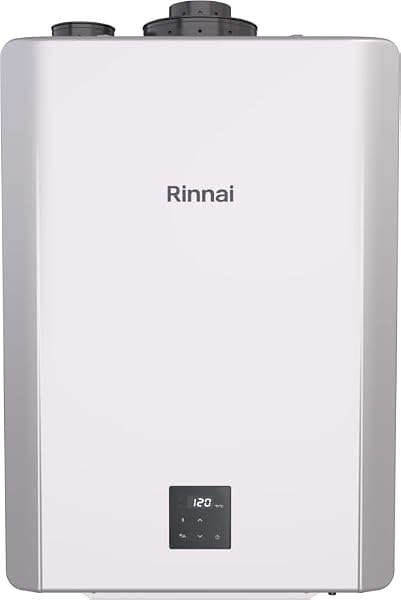
Rinnai Condensing Smart Sense is a condensing tankless water heater that can serve as the heat source for a hydronic radiant floor system, and its 199k BTU input and 11.1 GPM flow make it a fit for larger homes with several zones. The unit installs indoors or outdoors, which helps when a mechanical room is tight or nonexistent.
For radiant floor heat, the boiler has to carry a steady load over long run times, so capacity and turn-down matter more than a quick burst of hot water. The compact cabinet, roughly the size of a small suitcase, leaves more floor space for manifolds and piping.
Efficiency is the headline in the listing: a UEF of 0.98 from the condensing design means less propane burned per unit of heat delivered to the loop. Smart Sense gas control lets the same unit run on propane or natural gas, so a rural property without a gas line can still use it.
Built-in recirculation with Smart-Circ technology learns usage patterns and schedules the pump, which suits radiant systems that call for heat in predictable daily blocks. The interface is simple, and a Quick Flush feature simplifies the flushing that hydronic systems need.
The catch is installation and setup. Rinnai recommends a professional technician, and the WiFi Controlr module is sold separately, so smart control is not included out of the box. Buyers who want a simple, self-contained boiler with everything in one box should look at a dedicated boiler instead. This one rewards owners who have a qualified installer and want high efficiency from a compact wall unit.
6. Hydronic Radiant Heat Control Panel – 4 Zone
Pre-wired four-zone panel adds feed valve and backflow protection in one assembly

Not a boiler at all, Hydronic Radiant Heat 4 serves a different role. It is a preassembled distribution panel that sits between a propane heat source and up to four radiant floor zones. Copper piping, prewired pump controls and mounted components come together in one organized assembly, which cuts the on-site fabrication and wiring that a bare manifold would require.
The panel suits a homeowner or installer putting together a multi-zone underfloor system where each room needs its own schedule and temperature setting. It connects to a compatible heat source, so the propane boiler is chosen separately.
Each of the four zones has its own circulator pump, and a switching relay activates the matching pump when that zone’s thermostat calls for heat. That separation lets bedrooms run cooler than a living room without fighting the whole system. An integrated combination boiler feed and backflow valve automatically fills or replenishes the closed loop to its set cold-fill pressure when connected to a water supply.
An air separator continuously removes circulating air, and an expansion tank absorbs the volume changes as the fluid heats and cools. Temperature and pressure gauges give visible readings at startup and during troubleshooting. Connections include 1 in.
The limit is that this is a panel only. It does not generate heat, so the budget has to cover a propane boiler plus this assembly, and the buyer needs to match the heat source to the primary-secondary piping. Anyone wanting a single box that both heats water and distributes it should pick an integrated boiler instead. This panel is for people who already have or plan to buy a separate heat source.
7. Rinnai IP150199C I-SERIES Plus 150k BTU Condensing Combi Heat Boiler
Condensing combi pairs 150k space heating with 199k domestic hot water output
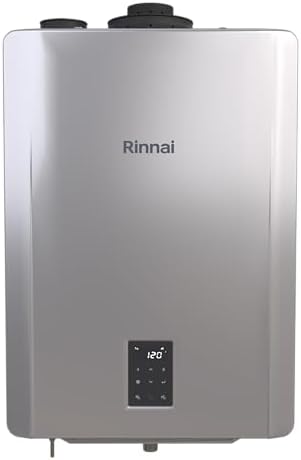
Condensing combi boiler Rinnai I-SERIES Plus 150k handles both domestic hot water and space heating from a single unit. That combination suits a homeowner or installer planning a radiant floor system who also wants instant hot water without a separate tank. For radiant floor heat, the boiler is the heat source that feeds the loops, so pairing it with a distribution panel and manifolds is the usual approach.
The unit can run on natural gas or propane, which helps where propane is the only fuel on site.
The listing states a 96% AFUE rating, so the condensing design captures more heat from the fuel before exhaust leaves the unit. Smart Sense Gas Valve technology manages energy delivery precisely, which matters when a radiant slab calls for gentle, steady output rather than sharp spikes. Common venting supports up to eight units, so multi family housing and commercial buildings can be served with one venting strategy.
Smart Connect Wi-Fi and the front panel display give control over heating and hot water settings from one place. A limited 15 year heat exchanger warranty, 5 year parts and 5 year labor apply when the product is registered within 90 days, otherwise labor defaults to one year.
The trade off is that this is a combi unit, so part of its capacity and control logic is shared with domestic hot water, and the radiant side depends on adding zone controls and manifolds separately. Buyers who want a simpler heat only boiler, or who already have a dedicated water heater, should look at a different heat source.
8. Hydronic Radiant Heat Control Panel – 1 Zone
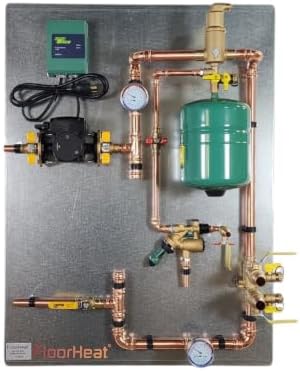
Preassembled control panel Hydronic Radiant Heat 1 organizes the distribution side of a radiant floor system. Copper piping, prewired pump controls and mounted components arrive together, which reduces on site fabrication and wiring. It suits an installer or a confident DIY homeowner connecting a compatible heat source, such as a propane boiler, to underfloor loops. The panel connects to the heat source and to radiant loop manifolds, making it the hub between boiler and floor.
The listing states that each heating zone has its own circulator pump, with a switching relay activating the pump when its thermostat calls for heat. Separate zone control lets different rooms run on different schedules and temperature settings, which fits radiant floors where slab response is slow and zone by zone control pays off.
An integrated combination boiler feed and backflow valve automatically fills or replenishes the closed system to its set cold fill pressure when connected to a suitable water supply. An air separator removes circulating air, an expansion tank absorbs volume changes as the fluid heats and cools, and combination temperature and pressure gauges give visible readings at startup and during troubleshooting.
Connections include 1 in. copper boiler connections with a primary secondary valve, plus 3/4 in. copper zone supply and return connections for manifolds.
The trade off is scope. This is a single zone panel, so larger homes with several heating areas need either multiple panels or a different manifold arrangement. Buyers who want a complete boiler plus distribution package in one box should expect to source the heat source separately.
9. Rinnai IP090S I-SERIES Plus 90k BTU Condensing Solo Heat Boiler
Solo condensing boiler reaches 96% AFUE and pairs with the Rinnai Central app
We researched the Rinnai IP090S I-SERIES Plus as a condensing solo heat boiler rated at 90k BTU for liquid heating, and compared it against other residential and light commercial units in the category. Our pick suits a modest home or a few zones where tubing runs are short and demand stays steady, such as radiant floor heat in a smaller house.
The compact gray cabinet measures about 26.4 inches tall and 18.5 inches wide, so it can tuck into a utility closet or basement corner without eating floor space. Homeowners replacing an older cast iron boiler often land on this size first, according to owner feedback we reviewed.
What matters most for a hydronic setup is how the unit handles low return water temperatures, and the condensing design with up to 96% AFUE is the headline in the listing. Smart Sense adaptive gas valve technology is stated to trim fuel use while holding steady temperatures across multiple zones, which helps address the cold spots that plague poorly balanced floor loops.
Bluetooth plus the Rinnai Central app let you adjust heating preferences remotely, and the boiler runs on natural gas or propane. The listing notes a limited 15 year heat exchanger warranty with 5 years on parts and labor when registered within 90 days; otherwise labor defaults to 1 year.
The catch is capacity. At 90k BTU this unit fits smaller or well insulated homes, and a large sprawling floor plan with many loops may push it near its limit on cold snaps. Buyers heating a big house or adding domestic hot water load should step up to the larger model instead.
10. Rinnai IP120S I-SERIES Plus 120k BTU Condensing Solo Heat Boiler
Two-inch venting and Bluetooth control suit larger homes needing 120k BTU
On paper, We researched the Rinnai IP120S I-SERIES Plus as a condensing solo heat boiler rated at 120k BTU, and compared it against the rest of the I-SERIES line plus owner feedback and expert research on residential heating. It suits spacious homes with larger radiant loads, such as long tubing runs, multiple manifolds or garage slabs, where the added capacity gives headroom a smaller unit cannot.
The gray unit measures about 26.4 inches tall, 18.5 inches wide and 18.5 inches long, weighs roughly 71.8 pounds and ships as a single item, so the footprint stays manageable as output grows. HVAC contractors sizing whole-home liquid heating systems commonly look in this range.
What matters most in the listing is the 2 inch venting capability, which gives installers flexibility when routing exhaust through a wall or roof, a practical benefit in retrofits where a chimney is unavailable. Bluetooth connectivity supports remote control, and Smart Sense adaptive gas valve technology is described as delivering precise temperature control for simultaneous domestic hot water and space heating.
The unit is specified for natural gas or propane, produces low NOx emissions and offers up to 96% AFUE efficiency.
The trade-off is that the higher output narrows the modulation range relative to demand, so a small, tight home may see more cycling than with a right-sized smaller unit, and the cabinet is physically larger than lower-capacity models. Owners with compact footprints or low heat loss should pick the 90k version instead.
How We Picked
Our picks come from product details and from what buyers say in customer reviews, not from advertising. We researched the specifications published for each boiler and compared them with owner feedback, then narrowed the field to units that hold up in real installations.
For this kind of product we compared heat output, fuel type and venting, modulation and efficiency, zone control, controls and connectivity, and the installation requirements each unit places on a home. We also weighed the physical details that matter for a retrofit, such as size and the venting options available.
Owner reviews shaped the list as much as the data did. Praise that came up again and again centred on steady floor warmth, quiet operation and simple controls.
Ordering the list was the last step. We set it so different needs and budgets are covered, from compact single zone setups to larger multi zone systems. Buyers with simple layouts and buyers with bigger homes each get a sensible starting point.
Frequently Asked Questions
What Decides the Running Cost of a Propane Boiler for Radiant Floor Heat?
Running cost for a propane boiler for radiant floor heat comes down to a few things we looked at closely in our research. The boiler’s efficiency rating sets how much of each unit of propane becomes usable heat, and condensing models capture more of it than older non condensing designs.
The size of the boiler relative to the heated floor area matters too, because an oversized unit short cycles and wastes fuel. Outdoor temperature and how well the building is insulated also change how often the burner fires.
Owners commonly report that the biggest swing factor is the thermostat strategy. Running the floor at a steady low temperature costs less than big setbacks and fast recoveries, because a concrete slab takes hours to warm back up.
Can a Propane Boiler for Radiant Floor Heat Run Overnight or Unattended?
A propane boiler for radiant floor heat can run overnight, and most owners do exactly that because a slab holds heat for hours after the burner stops. What matters is that the boiler has its own safety controls, including a low water cutoff, a high limit switch and a pressure relief valve, and that the venting is installed to code.
We researched controls and found that units with outdoor reset and freeze protection handle unattended operation more predictably than basic on off models.
Unattended operation still needs a few habits. Check the propane level before a cold stretch, since a runout on a freezing night is the main risk owners describe. Keep the condensate line clear on condensing models, because a frozen drain can shut the boiler down.
What Size Propane Boiler Do I Need for Radiant Floor Heat in My Rooms?
Sizing a propane boiler for radiant floor heat is about the heat load of the slab and the building, not the square footage alone. We compared manufacturer sizing guidance and found that a room by room heat loss calculation, covering insulation, window area and design outdoor temperature, is the starting point. Radiant floors run at lower water temperatures than radiators, so the boiler’s output at those temperatures is what counts, not its peak rating.
Our research shows that oversizing is the more common mistake. A boiler that is too large short cycles, which is inefficient and harder on the components. Underfloor systems also need a mixing valve or a boiler that can modulate down to low firing rates, so the floor never gets water hotter than the slab can safely take.
How Noisy is a Propane Boiler for Radiant Floor Heat?
Noise from a propane boiler for radiant floor heat comes from a few sources, and we looked at each in our comparisons. The burner and blower produce the main sound, and modulating models generally run quieter at low fire than units that only run full on or off. Pumps and circulators add a hum, and water flow through the floor tubing can gurgle if air is trapped in the system.
Owners commonly report that location decides how much they notice. A boiler in a utility room or garage is rarely heard in living spaces, while one mounted near bedrooms draws more complaints. We also found that proper air elimination and correct pipe sizing reduce the noise people describe as knocking or whooshing. If quiet matters, look at the manufacturer’s sound data and plan the mechanical room away from sleeping areas.
Is a Propane Boiler for Radiant Floor Heat Safe Around Children and Pets?
Safety around children and pets starts with the surfaces, and that is a strength of radiant floor heat. A slab heated by a propane boiler runs at low water temperatures, so the floor stays warm rather than hot, which reduces the burn risk compared with radiators or baseboard units. We still recommend keeping the boiler itself, its venting and any exposed piping out of reach behind a locked or gated utility space.
Our research also covered combustion safety. A propane boiler needs proper venting and a carbon monoxide alarm nearby, the same as any fuel burning appliance. Keep the area around the boiler clear of stored items, and make sure the relief valve discharge and condensate drain are routed safely. Pets sometimes chew wiring or nest near warm equipment, so inspect the mechanical room periodically.
Can I Plug a Propane Boiler for Radiant Floor Heat into an Extension Cord or Power Strip?
A propane boiler for radiant floor heat should be on its own dedicated circuit, not an extension cord or power strip. We reviewed installation guidance and found that boilers draw current for the burner, blower and circulator pumps, and manufacturers specify the circuit requirements in the manual. Extension cords and power strips are not rated for continuous duty at those loads and can overheat.
Our advice is to have an electrician provide a properly sized circuit with a disconnect near the unit. If a temporary cord seems necessary during a service call, use a heavy gauge cord rated for the load and keep it short, then remove it. Power strips with surge protection do not substitute for a dedicated circuit. Check the data plate and manual for the actual electrical requirement before any wiring decision.
Final Thoughts
Our research team compared product data, owner feedback and expert research to pick the best propane boiler for radiant floor heat. Hydronic Radiant Heat Control is our best overall pick because its control features and reported reliability suit most homes. Hydronic Radiant Heat 1-Zone fits buyers who want a simpler single zone setup.
For larger homes with several heated areas, Hydronic Radiant Heat 3-Zone is the better match, since owners commonly report it handles multiple loops without fuss. Match the zone count and output to your floor plan before you buy.
Check the boiler’s output against your home’s heat load, and confirm the zone count fits the rooms you plan to heat. That single step prevents most sizing mistakes.