Skip a proper heater and the pool sits cold for half the season, wasting the money you spent filling it. Cold water also keeps everyone out, so the pool becomes an expensive ornament.
Owners of smaller above ground pools want warm water without a plumbing project, and the wrong unit quietly drains electricity or fails to raise the temperature. Our guide points you to the best electric pool heater for above ground pool.
Every pick had to be an electric heater suited to above ground pool setups. We compared heating capacity in BTU, power draw, flow requirements, and how each unit handles installation and daily running.
Top 3 Picks for Best Electric Pool Heater for Above Ground Pool


How to Choose the Best Electric Pool Heater for Above Ground Pool
Choosing an electric heater for an above ground pool comes down to matching the unit to your water volume, your power supply and how you cover the pool. Above ground pools lose heat fast through thin walls and the open surface, so insulation and a cover matter as much as the heater itself. We compared product data and owner feedback to narrow down what actually works.
Heat Type and Where It Fits
Electric heaters for above ground pools mostly use ceramic fan, oil-filled, infrared or convection designs, though many pool units are simple element heaters that warm water as it flows through. Ceramic fan units heat air quickly and suit small enclosed spaces, while oil-filled and convection types hold warmth longer.
Wattage, Water Volume and Your Circuit
Output needs to match your pool volume, not just the heater’s box. Small above ground pools of a few thousand litres warm faster with lower output, while larger pools need more power to hold temperature. A standard household circuit can only carry so much, so check the amperage your heater draws against the breaker. We compared stated wattages and pool size recommendations across the range to see which units suit typical garden setups.
Safety Cut-Offs, Thermostat and Timer
Outdoor pools sit near water and weather, so safety features are not optional. Look for automatic cut-offs that trip when flow stops or the unit overheats, a thermostat to hold your target temperature, and a timer so the heater runs when you need it. We checked which models list these protections clearly, since owner feedback often flags missing cut-offs as the main worry with cheaper units.
Quick Comparison
Full Reviews of Each Pick
Our Top Pick
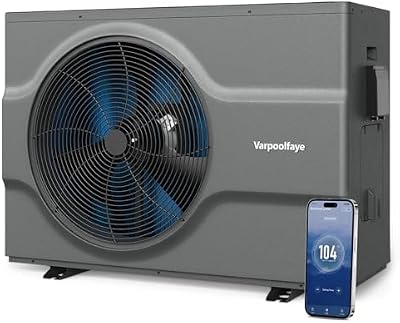
1. Varpoolfaye 65,000 BTU Inverter Pool Heat Pump for Inground Pools 220V
Delivers 65,000 BTU at COP 6.6 with WiFi app control and 1.5-inch connectors

Varpoolfaye 65 is an inverter heat pump built for above ground pools and smaller inground setups, and it suits owners who want to extend the swim season without a gas line. The 65,000 BTU rating and 21,000 gallon capacity make it a sensible match for a typical backyard above ground pool.
We looked at how it fits the way most above ground owners run their equipment, with a pump, a filter and often a cover, and the 1.5 inch connectors and 118 inch cord keep the install simple.
What matters most on this model is the inverter setup. The listing states a COP of 6.6 and inverter mode for longer lifespan and lower energy use, plus a one button fast heat function on the touch panel. It runs at 45dB, which is quiet enough for a backyard where people sit near the pool.
WiFi app control lets you adjust temperature and schedule run times remotely, and the design works with both freshwater and saltwater. Water electric separation is listed for safety at home, which is worth knowing on an above ground install where the equipment often sits close to the pool.
The real limit is the capacity. At 21,000 gallons it will not keep up with a large above ground pool, and the listing itself notes that condensation from the bottom is normal during heat exchange and defrosting. Owners of bigger pools, or anyone in a cold climate expecting fast recovery, should look at the larger model instead. Buyers with a mid-size pool and realistic expectations about using a cover will find this one fits the job.
2. Varpoolfaye 120,000 Btu Inverter Pool Heat Pump for Inground Pools 220V
Pushes 120,000 BTU with COP 12.3 for pools up to 33,000 gallons
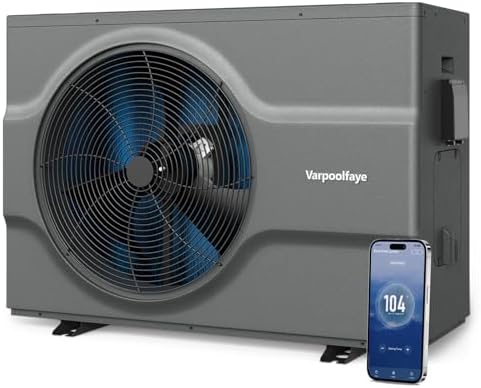
For above ground pools on the larger side, Varpoolfaye 120 is the bigger inverter heat pump in this pair, rated for up to 33,000 gallons. That capacity is what makes it relevant to owners who have a big above ground pool or an inground pool and found smaller heaters fell short.
The 120,000 BTU output and 220V supply put it in a different class from the 65 model, and the same 1.5 inch connectors and 118 inch cord keep the plumbing and wiring straightforward.
The headline figure in the listing is a COP of 12.3, paired with inverter mode for longer lifespan and lower energy use. A one button fast heat function on the intelligent touch panel is there for quick warm ups, and WiFi app control covers temperature, schedules and modes from a phone.
It runs at 47dB, only slightly louder than the smaller unit, and it is designed for both freshwater and saltwater. Water electric separation is listed for home safety, and the listing again points out that a pool cover significantly improves heating efficiency, which matters even more on a large above ground pool where heat loss is high.
The trade-off is that this is a lot of heater for a small pool, and the listing notes condensation leaking from the bottom is normal during heat exchange and defrosting. Owners with a modest above ground pool will get more capacity than they need and should consider the smaller model. This one suits buyers with a large pool who want headroom and are prepared to run a cover to get the most from it.
3. Varpoolfaye 16000 BTU Electric Pool Heater for Above Ground Pool
Handles heating and cooling for 5,000-gallon pools on standard 110V power

Built for above ground pools up to 5000 gallons, the Varpoolfaye BTU Electric Pool heat pump suits owners who want to swim earlier in spring and later into autumn without buying a gas unit. The 110V 60Hz setup and included DN32-38 mm connectors mean it fits common above ground plumbing, and the 118 inch power cord gives some slack at the pad.
For a family pool that sits in the yard all season, this is the kind of unit that handles both warming and cooling duties.
What matters most here is the dual mode. The listing states heating from 59-104°F and cooling from 46-82°F, so the same machine works through hot spells as well as cool mornings. A titanium heat exchanger and high power compressor support the 16000 BTU output, and the stated COP of 4.3 reflects how efficiently it moves heat from the ambient air into fresh or salt water.
WiFi control with timed on and off lets you start the pump before you get home, and the 50dB noise level plus water-electric separation are sensible for a backyard where people sit and kids play. A pool cover is recommended to improve heating efficiency.
One real limit is condensation. The listing notes it is normal for water to leak from the bottom during heat exchange and defrosting, so the unit needs a spot where that runoff will not pool or damage a deck. Owners who want a simple set-and-forget heater may prefer a basic model, while anyone wanting app control and cooling should keep this one on the list.
4. Swimming Pool Heater for Above Ground and Inground Pool 12'*14'*48"
Runs at 38dB with 5.5 COP and auto-defrost for above-ground pools

Swimming Pool Heater is a 16000 BTU heat pump sized for above ground pools up to 5000 gallons, including the 12 by 14 by 48 inch pools named in the listing. It suits owners who want a long season and a quiet yard, since the stated 38 dB operating sound is quieter than a whisper.
The 110V power requirement and included hose adapters make it a reasonable match for typical above ground setups where the pump and filter sit close together.
Temperature control is the headline. The listing states heating between 41-104°F and cooling within 41-83°F, with a precision thermostat holding accuracy to plus or minus 2°F. A 5.5 COP is quoted, along with claims of 70 percent less energy use than conventional electric heating and 40 percent more savings than natural gas alternatives.
Auto-defrost clears ice buildup so the unit can keep working in cold snaps, and the panel supports multi-mode smart control. Installation is listed at under 10 minutes with the 1.25 inch adapters and 1.5 inch conversion kits, and a 3-year warranty with lifetime technical support backs it.
The main trade-off is weight. At 72 pounds, this is not a unit one person should lift onto a pad alone, and it needs a solid, level base with room for the condensate that heat pumps produce. Buyers on a tight budget or with a very small pool may find a simpler heater sufficient, but for quiet, efficient operation across seasons this one fits the job.
5. Varpoolfaye 30,000 BTU Electric Above Ground Pool Heater for 7,000 Gallon
Delivers 30,000 BTU at COP 5.8 with a titanium heat exchanger and WiFi

Larger above ground pools are the target of the Varpoolfaye 30 heat pump, the kind of setup where a small heater simply cannot keep up. The listing rates it for pools up to 7000 gallons, which covers 14 to 23 foot round and oval models, so it suits a family with a big backyard pool who wants a real jump in water temperature.
If your pool holds a serious volume of water, this is the size class to look at rather than a compact unit.
A high pressure compressor pushes the maximum output to 30000 BTU, and the stated COP of 5.8 suggests it moves a lot of heat for the electricity it draws. Heating runs from 46F to 104F and cooling from 46F to 82F, so the same machine can take the edge off a hot summer stretch.
WiFi control lets you set temperature and schedules from the app, and the titanium heat exchanger handles fresh or salt water, which matters for above ground pools that often run salt systems. Connectors are 1.5 inch and the power cord runs 126 inches, and the listing notes that a pool cover noticeably improves efficiency.
One real limit is the 110V supply and the physical size, since the unit measures 35 inches long and 22 inches high, so you need space and a dedicated circuit near the pool. Condensation dripping from the bottom is normal per the listing, so plan drainage. Buyers with pools well under 7000 gallons may find this more capacity than they need, and a smaller heat pump would suit them better.
6. Varpoolfaye 5,500 Gallon Heat Pump Pool Heater for Above Ground Pool 110v
Covers 5,500 gallons with 16,000 BTU, 50dB operation and app control
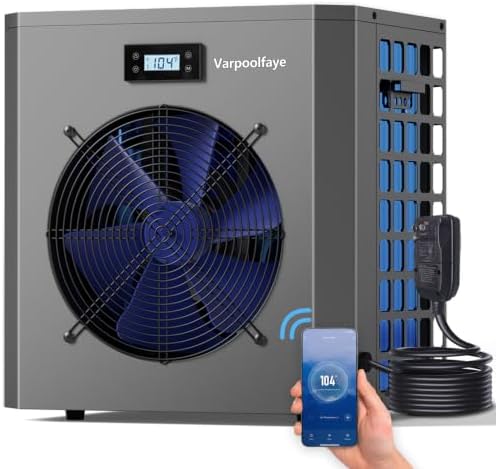
Smaller above ground pools are the focus of the Varpoolfaye 5, a compact heat pump rated for up to 5500 gallons. That puts it in the frame for typical round family pools where a full size unit would be overkill. It suits a buyer who wants to extend the swim season without dedicating a lot of space or power to the job, and the gray cabinet is small enough to tuck beside most pool setups.
Inside, a high output compressor and titanium heat exchanger deliver 16000 BTU of heating and cooling, so the unit can warm the water or cool it during a hot spell. The stated COP of 4.3 points to efficient operation on standard 110V power, and the listing claims energy savings of 43 percent compared with less efficient options.
Sound dampening insulation keeps noise down to 50 dB, which helps if the pool sits near a patio or seating area. WiFi control covers temperature and mode changes from the app, and the smart water electric separation design adds a safety layer. Two DN32 to 38 mm universal connectors and a 118 inch cord come in the box, and the listing asks for a pump delivering around 700 GPH.
The trade-off is capacity, since 5500 gallons is the ceiling and larger pools will outrun this heater. It also depends on decent pump flow to work properly. Owners of big pools, or anyone in a cold climate expecting strong heating in low air temperatures, should step up to a larger model instead.
7. TURBRO 50,000 BTU Inverter Pool Heater, Up to 15,000 Gallons
Full DC inverter compressor with up to 15.90 COP and IPX4 waterproofing

TURBRO 50 is a heat pump style electric heater, sized for above ground pools that need steady warmth through cooler spring and fall days. Owners of round or oval above ground pools up to roughly 28 feet find it suits the job of holding a consistent water temperature rather than turning the pool into a hot tub. The titanium heat exchanger handles saltwater and chemical exposure, which matters for above ground pools that often run salt systems.
Inverter technology sits at the heart of the design, adjusting compressor output based on ambient temperature, water flow and the set point so the water stays stable instead of swinging. A COP of up to 15.90 and heating capacity up to 75,000 BTU point to efficient operation, and the brand says it cuts running costs compared with natural gas and propane.
WiFi control with two timer periods lets you schedule heating around your swim habits, and multiple built in sensors monitor water temperature, flow, pressure and electrical parameters, shutting the unit down and showing an error code if something faults.
Efficiency depends on the weather, since the brand notes the pump performs best at outdoor temperatures of 60°F or above, and performance drops as the air cools. It is also not recommended for inflatable pools because of low water pressure. Buyers with an inflatable pool or a very small setup should look at a simpler option, while above ground owners with a proper filter system and a cover will get the most from it.
8. Swimming Pool Heater for Above Ground and Inground Pool 12'*18'*48"
Offers 18,000 BTU at 38dB with 1.25-inch adapters and a 3-year warranty

We researched this unit as a compact heat pump aimed at above ground pools, and its 110V power requirement makes it easier to connect to a standard household circuit than 220V alternatives. It suits owners of smaller above ground pools up to roughly 6,500 gallons who want warming and cooling from a single machine.
The dual mode design lets it heat water between 41 and 104°F or cool it between 41 and 83°F, which helps extend the swimming season by up to six months.
Our comparison of the listed specs put the 5.5 COP rating at the center, with the brand claiming it cuts energy consumption by 70% versus conventional electric heating and saves 40% against natural gas. The thermostat holds temperature within plus or minus 2°F by continuously monitoring ambient conditions, so the water stays steady through the day.
Quiet operation at 38 dB keeps noise low near a patio or garden, and an intelligent auto defrost cycle removes ice buildup in cold weather. Installation uses both 1.25 inch hose adapters and 1.5 inch conversion kits, and the brand backs it with a 3 year warranty plus lifetime technical support.
The trade-off is capacity, since this unit is rated for pools up to 6,500 gallons, so larger above ground pools will need a bigger heater to keep up, and cooling mode works only down to 41°F water. Owners with a large pool or one that sees heavy use should pick a higher output model instead.
9. TURBRO 18,000 BTU Swimming Pool Heat Pump, Up to 6,000 Gallons
Compact 18,000 BTU unit with titanium exchanger, GFCI plug and auto-defrost

Taken on its own, TURBRO 18 is a compact air source heat pump built for smaller above ground pools, inflatable pools, frame pools and small spas. It runs on a standard 110 to 120 volt circuit, so it suits owners who want to plug in without running a dedicated 220 volt line.
The size fits round pools up to 16 feet or rectangular pools around 12 by 20 feet, with a capacity of up to 6,000 gallons. That makes it a sensible match for a modest backyard setup rather than a large pool.
Output is rated at 18,000 BTU with a 5.5 COP, and the listing says air source technology can save up to 40 percent on energy costs compared to natural gas heaters. A titanium heat exchanger improves heat transfer and resists corrosion, so saltwater pools are compatible.
The four-way valve switches between heating and cooling, with a heating range of 59 to 104 degrees Fahrenheit and a cooling range of 46 to 82 degrees. A programmable timer helps schedule run times, and the IPX4 rating, GFCI plug and auto-defrost add safety for outdoor use.
Setup is simple with hose clamps, connectors and a drain adapter included, but the unit works with flexible hoses only, and PVC piping needs additional parts. Water hoses and pool filters are not included, and at 80 pounds the shipment arrives on a pallet. Owners of larger pools or those planning rigid plumbing should consider a bigger unit instead.
10. Varpoolfaye 90,000 Btu Inverter Pool Heat Pump for Inground Pools 220V
Rates 90,000 BTU at COP 12.5 for 25,000-gallon pools with app scheduling
On paper, We researched the Varpoolfaye 90 as an inverter heat pump for larger above ground pools and inground pools, sized by the listing to heat up to 25,000 gallons. It runs on 220 volts, so it fits owners who already have that circuit or plan to have one installed.
The inverter design is stated to extend lifespan and lower energy use, which matters for a pool that runs many hours across a season. For a big above ground pool, this capacity places it well beyond small plug-in units.
From the product data, the listing states 90,000 BTU with a COP of 12.5, extracting heat from ambient air and transferring it to the water for rapid, stable heating. It handles both freshwater and saltwater and runs at just 47dB, which helps keep a backyard peaceful.
An intelligent touch panel includes a one-button fast heat function, and WiFi app control lets you adjust temperature, schedule run times or switch modes remotely. The 1.5 inch connectors and 118 inch cord simplify setup, and water-electric separation adds a safety layer at home.
The 220 volt requirement is the main trade-off, since it will not run from a standard household outlet. The listing also notes condensation leaking from the bottom is normal, and a pool cover is recommended to improve efficiency. Owners with only 120 volt power or a much smaller pool should look at a smaller plug-in model instead.
What It Costs to Run
Wattage and hours of use decide what one of these adds to the electricity bill. The table uses the power figures from the listings above, at the highest setting.
| Power | 1 hour | 4 hrs a day | 8 hrs a day |
|---|---|---|---|
| 5,000 W | 5 kWh | 20 kWh | 40 kWh |
To turn kWh into money, multiply by the price per kWh on your bill. A thermostat or a lower setting cuts the hours at full power, so real use is often below these figures.
How We Picked
Our picks come from the product details supplied for each electric pool heater and from what buyers say in customer reviews. We do not rely on advertising claims or promotional copy.
We compared the details that matter for this kind of product, including heating capacity, power requirements, size and weight, materials, installation needs and safety features. We also looked at how each unit is controlled and what maintenance it demands.
Patterns in customer reviews shaped our list. Praise often centres on quick heating, simple setup and steady performance, while complaints tend to mention noise, flow requirements or durability over time. We weighed both sides, so a heater only earned a place if the positives clearly outweighed the recurring issues.
Ordering the list was about covering different needs and budgets. Smaller pools and tighter budgets sit alongside larger, more powerful units, and we grouped picks so buyers can match capacity to their pool. Our research team built the order around practical fit rather than hype.
Frequently Asked Questions
What Decides the Running Cost of an Electric Pool Heater for Above Ground Pool?
Running cost for an electric pool heater for above ground pool comes down to a few linked factors. The heater’s wattage sets how much power it draws per hour of operation. The gap between your pool water temperature and the air temperature decides how long the heater must run to hold your target.
Above ground pools lose heat faster than in-ground ones because the walls and exposed plumbing shed warmth, so an unheated night means more run time the next day. A solar cover traps heat and cuts evaporation, which is the biggest heat thief in an above ground pool.
We looked at how owners report costs in practice. Most say the cover matters as much as the heater itself. Without one, the heater fights the night air and the water surface all day.
Can an Electric Pool Heater for Above Ground Pool Stay on Overnight or Run Unattended?
Leaving an electric pool heater for above ground pool running overnight is common, but it needs the right setup. Most units have a thermostat that shuts off at your set temperature, so they cycle rather than run flat out. That said, an above ground pool loses heat fastest at night, so an overnight run often means the heater works harder for less gain.
Many owners set a timer to run the heater during the day and switch it off after dark. A solar cover on at night keeps more heat in than the heater can add after sunset.
Unattended operation raises a few practical checks. The heater needs steady water flow, so a pump failure while the heater runs can trip a flow switch or, on cheaper units, cause overheating.
What Wattage Electric Pool Heater for Above Ground Pool Do I Need for My Pool Size?
Wattage for an electric pool heater for above ground pool should match the water volume and how fast you want heat. A small pool of a few thousand gallons needs far less power than a large round or oval pool. As a rule, the heater must replace the heat the pool loses each day plus raise the temperature to your target.
Above ground pools lose heat through the walls, the surface and the plumbing, so the loss is real even on mild days. Match the kilowatt rating to the gallon count and the temperature lift you expect.
We compared how owners size these units and the common mistake is going too small. An undersized heater runs nonstop and still lags on cool nights, which wastes power and shortens the unit’s life.
How Noisy is an Electric Pool Heater for Above Ground Pool?
Noise from an electric pool heater for above ground pool depends on the type. Heat pump models use a fan and compressor, so they hum and blow air, similar to a central air conditioner. That sound carries, and an above ground pool often sits close to a patio, deck or neighbor’s fence, so placement matters.
Resistive electric heaters have no fan or compressor and run almost silently, but they draw far more power for the same heat. Owners commonly report the heat pump noise is noticeable within a few feet and fades with distance.
We looked at owner feedback on placement and noise. Most say a heat pump is fine if it sits a few feet from seating areas and away from bedroom windows. Vibration matters too, so a solid, level base reduces rattle and hum.
Is an Electric Pool Heater for Above Ground Pool Safe Around Children and Pets?
Safety around children and pets starts with the electrical side of an electric pool heater for above ground pool. The unit must be on a circuit with proper grounding and protection, and any connections should be sealed and kept dry. Water and electricity are a bad mix, so the heater should sit on a stable base above splash level, with cords and wiring routed away from the pool edge.
Above ground pools often have low walls and kids leaning over, so keep the heater and its controls out of easy reach. A lockable cover or a fenced equipment area adds a layer of protection.
The hot parts of the unit matter too. Heat pump cabinets stay fairly cool, but resistive heaters and their outlets can get hot to the touch, so pets and small hands should not brush against them.
Can I Run an Electric Pool Heater for Above Ground Pool on an Extension Cord or Power Strip?
An electric pool heater for above ground pool should not run on a standard extension cord or power strip. These heaters draw high current, and a household cord or strip is not rated for that load. The result can be melted plugs, tripped breakers or a fire risk, especially near water.
Above ground pools make this worse because the heater often sits far from the outlet, tempting owners to reach for an extension cord. We advise against it. The unit needs a dedicated circuit sized to its rating, installed by a qualified electrician.
We compared the electrical requirements in the product data and the pattern is consistent. Heaters specify a dedicated breaker and the correct wire gauge, and some need a hardwired connection rather than a plug.
Final Thoughts
After comparing the product data, owner feedback and expert research, we picked the Varpoolfaye 65 as the best electric pool heater for above ground pool use. Its capacity suits most mid sized above ground pools, and owners commonly report steady heating without fuss. For larger pools, the Varpoolfaye 120 offers more heating capacity and is the better fit.
Buyers on a tighter budget or with a small pool can look at the Varpoolfaye 30, which covers lighter heating needs. Match the heater’s capacity to your pool volume and your typical season length before you buy.